Ukrainian Tech in the Fourth Year of War — Results of IT Research Ukraine 2025

The Lviv IT Cluster team has presented the results of IT Research Ukraine 2025, a comprehensive examination of Ukraine’s tech industry during wartime. The study covers over 300,000 specialists, 2,000 companies, and billions in exports, capturing key market trends, industry sentiment, and forecasts for the year ahead.
IT Sector Dynamics: Stabilization Despite Major Challenges
Tech remains Ukraine’s largest exporter of services:
- Computer services account for 41.9% of the country’s total service exports, ranking first across all categories.
- IT accounts for 12.3% of total exports of goods and services, second only to food and agricultural products.
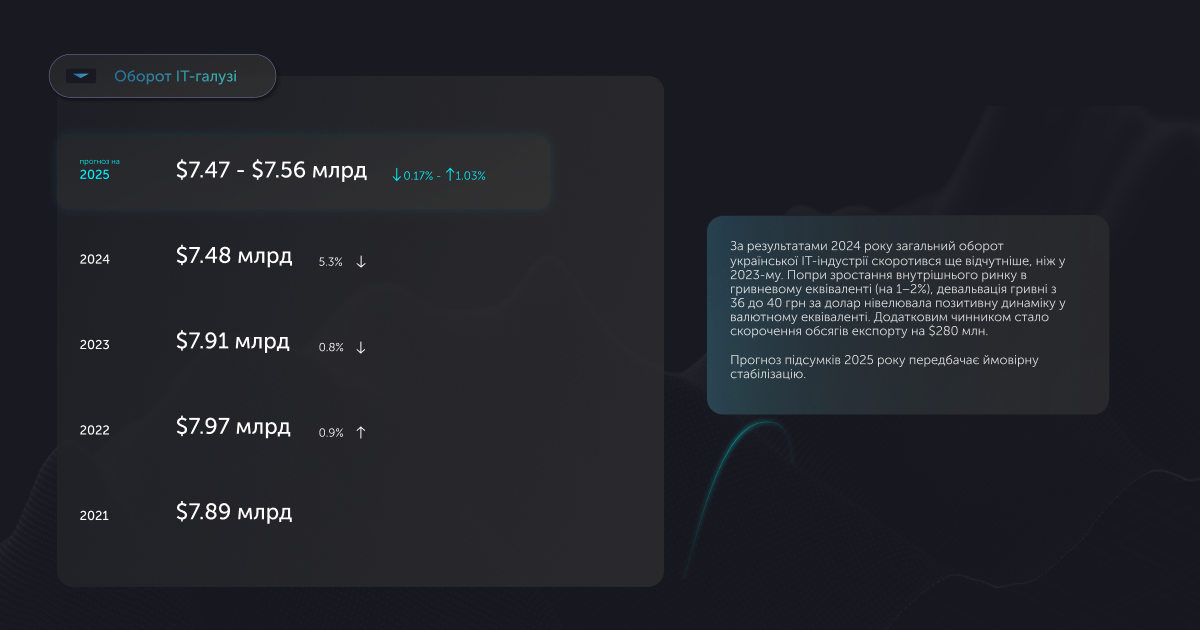
In 2024, the sector generated $7.48 billion in turnover and $6.45 billion in exports. While the domestic market grew slightly in hryvnia terms (1–2%), the devaluation of the currency and declining demand for some services resulted in weaker dollar-denominated performance. Overall, industry turnover fell by 5.3%, marking a second consecutive year of no growth.
Forecasts for 2025 point to cautious stabilization:
- Optimistic scenario: $7.56 billion (+1.03%)
- Pessimistic scenario: $7.47 billion (–0.17%)
The IT sector’s share of GDP dipped from 4.43% in 2023 to 3.92% in 2024. The relative decline reflects faster nominal growth in other areas, such as defense, manufacturing, construction, and energy, while IT held relatively steady in nominal terms. Under favorable business conditions and stronger engagement in dual-use and defense solutions, the sector could recover to 4–4.2% of GDP by 2026.
Each IT job supports an additional 2.7 jobs elsewhere in the economy. Altogether, the industry ensures roughly 644–645 thousand direct and indirect jobs.
How Companies, Talent, and Mobility Are Evolving
Today, Ukraine has 2,062 active verified IT companies:
- 46% outsourcing
- 2% outstaffing
- 31% product
- the rest operate hybrid models
Most companies have stabilized after several turbulent years and are actively seeking growth strategies.
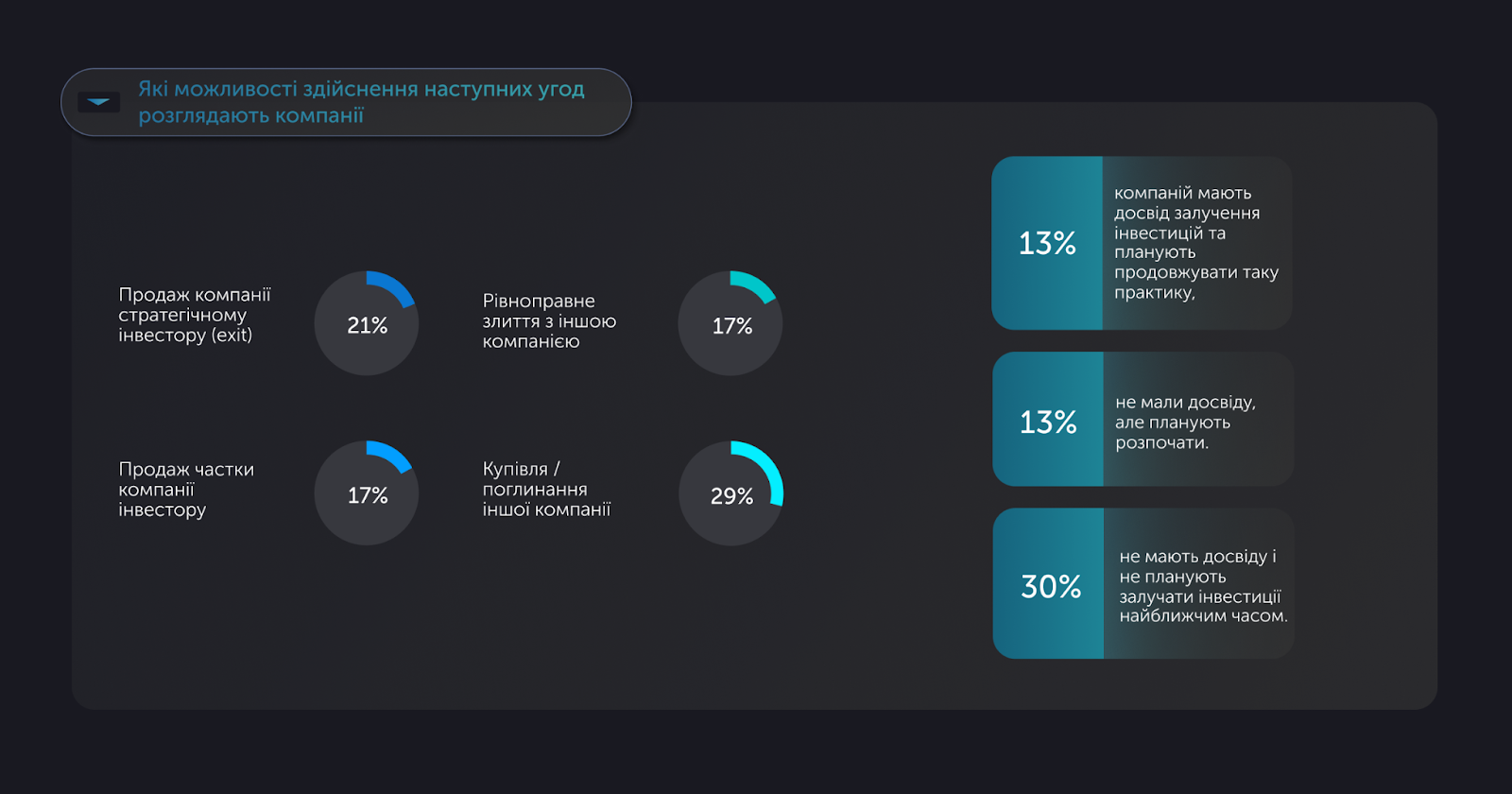
- 13% have already raised investment and plan to continue
- 13% have never raised investment but plan to start
- 30% have no investment history and no plans to pursue it
When considering corporate development, companies are exploring:
- sale to a strategic investor — 21%
- sale of a company stake — 17%
- mergers — 17%
- acquisition of another company — 29%
Awareness of Diia.City, Ukraine’s unique legal and tax framework for tech, is nearly universal:
- 3,095 resident companies
- more than 130,000 specialists employed by resident companies Diia.City
- 9 out of 10 specialists know about the project
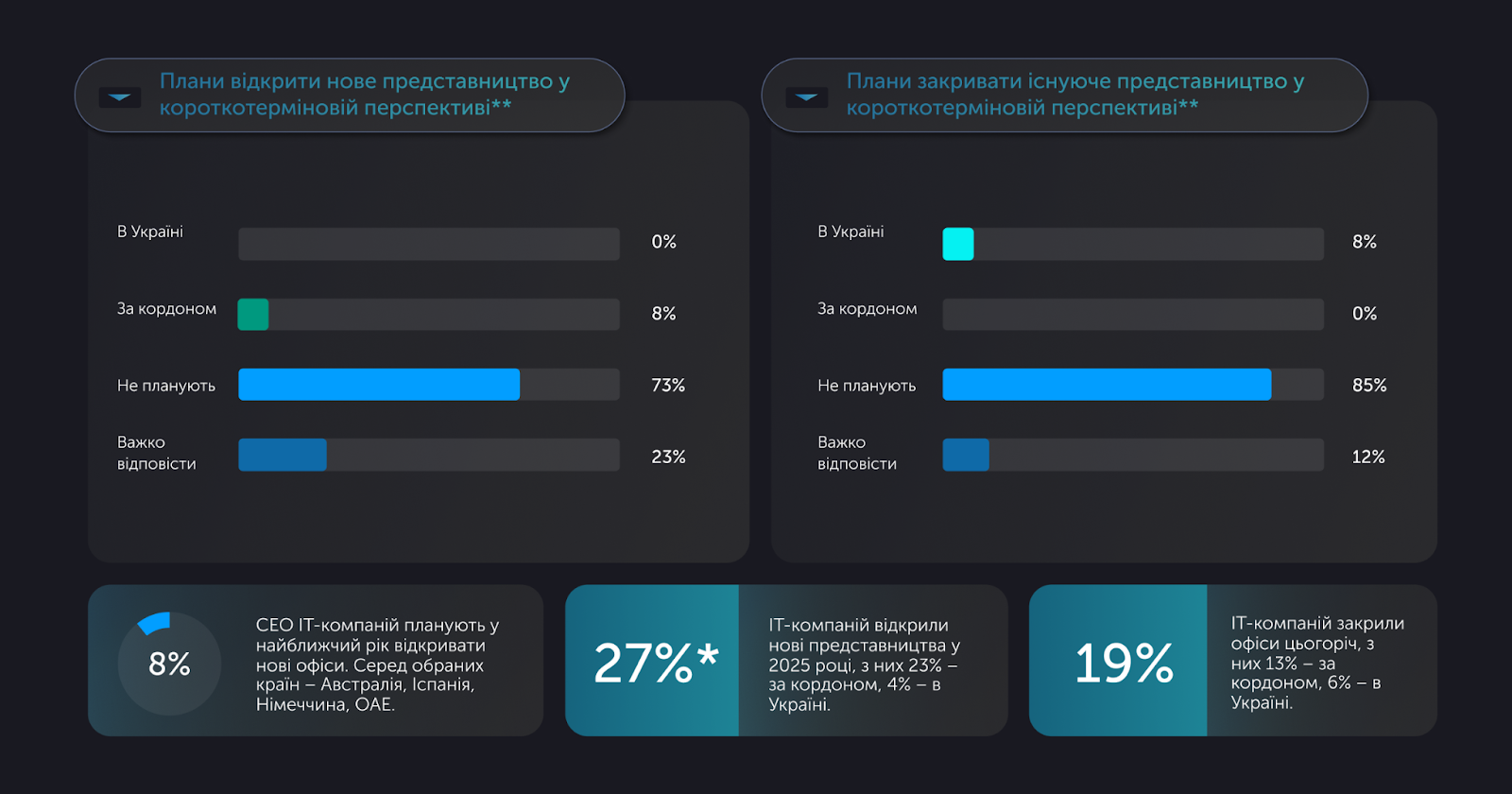
Ukrainian IT companies continue to open new offices, although mostly abroad. In 2025, 27% of companies opened new locations — 23% abroad and 4% in Ukraine. Only 8% of CEOs plan to open offices next year, while 8% intend to close offices in Ukraine. The most popular destinations: Spain, Germany, the UAE, and Australia.
75% of companies have mobilized employees, and 35% employ veterans. Many companies support mobilized staff with guaranteed job retention, fixed payments, or partial salary compensation.
The number of IT specialists remains close to last year:
- 303,000 specialists total
- 245,000 live and work in Ukraine (up 2.9%)
- 58,000 work abroad (down from 62,000–64,000)
- However, 1 in 5 is considering emigration
Ukraine maintains a deep pool of experienced talent:
43% of technical specialists have 6–15 years of experience, 12% have 15+ years, and over 88% are Middle, Senior, or Lead-level.
Half of all specialists have a computer science-related technical education; more than a quarter hold technical degrees in other fields. About 5% combine two or more specializations.
Portrait of an IT Specialist: Rising Costs, Slightly Lower Savings
More than half of Ukrainian IT specialists are 31+, and the average age continues to rise:
- 2023 — 30.9
- 2024 — 31.5
- 2025 — 32.8
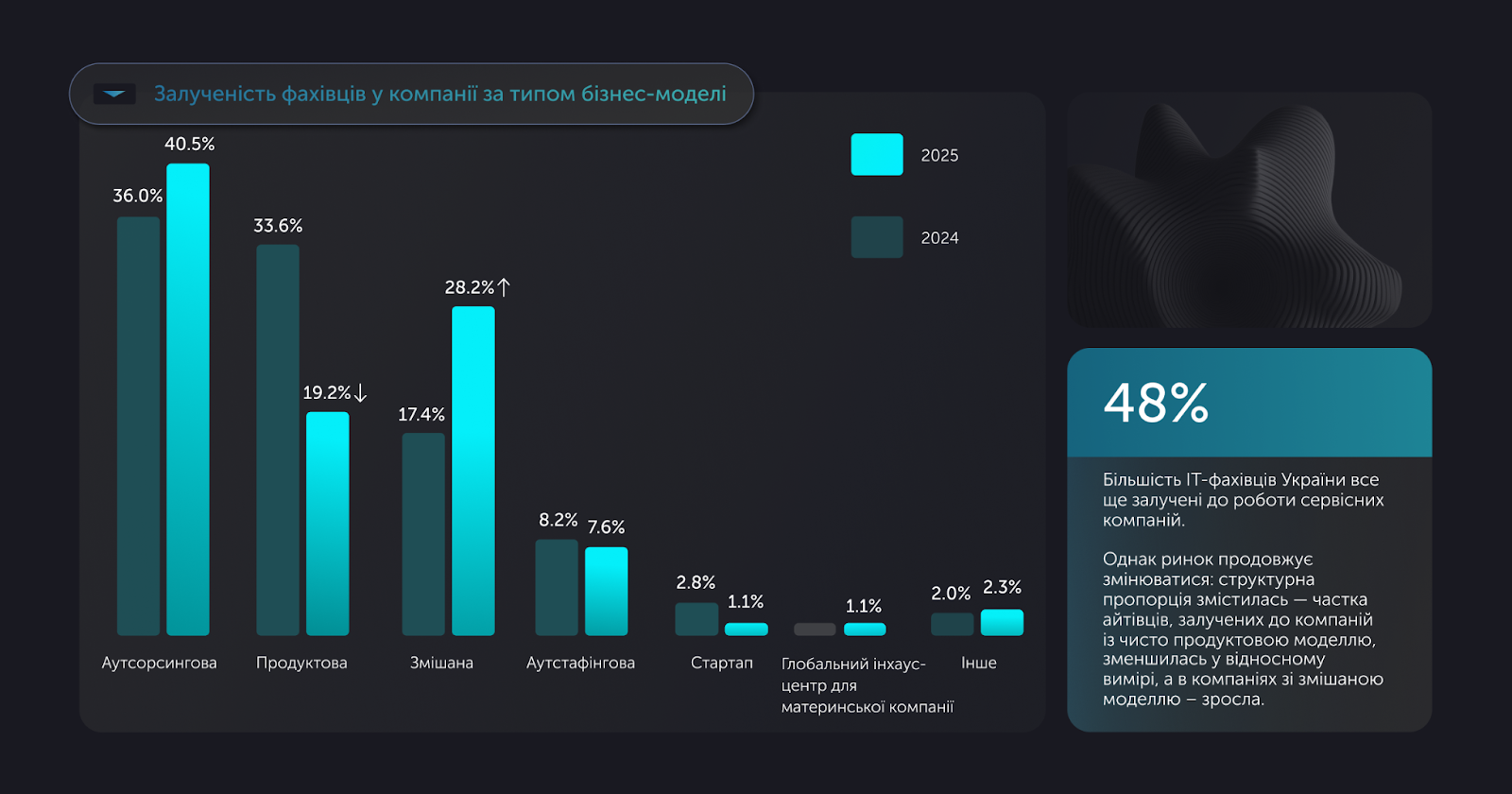
Service companies still employ the majority — 48%. But the market mix is shifting:
The share of product-only companies dropped from 33.6% to 19.2%, while the share of mixed-model companies increased from 17.4% to 28.2%.
Median income for technical specialists increased 4.2% year-over-year to $2,700. However, expenses also rose: 82.9% report higher costs (up from 75.6%).
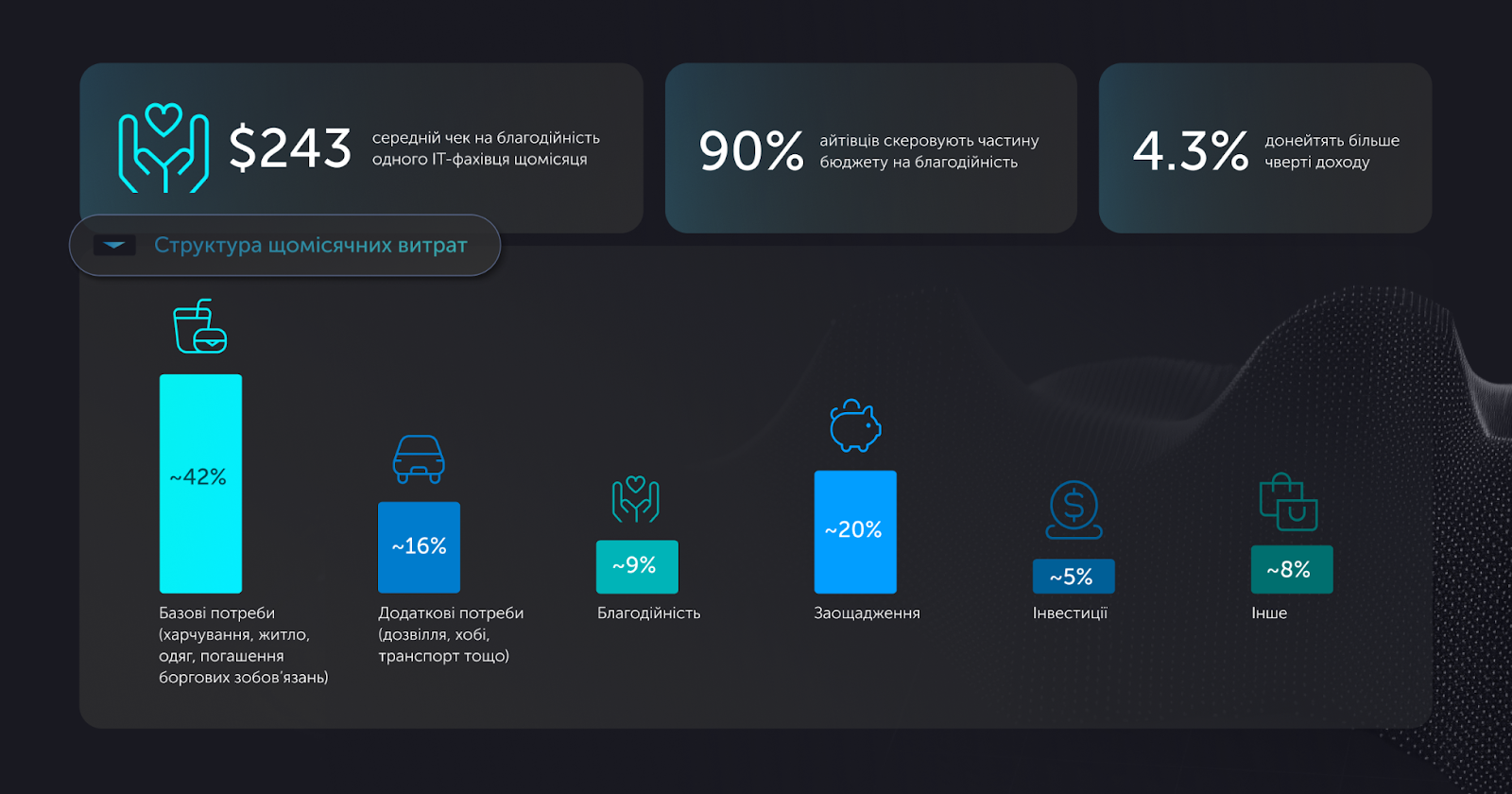
78.6% of specialists continue to save money, setting aside on average 20% of income — down from 23% (2024) and 26% (2023). Still, one in ten manages to save more than half their salary. Most expenses are allocated toward essentials, such as housing and food.
Charitable giving remains a defining feature of Ukraine’s tech community:
- 90% donate regularly.
- 4.3% donate more than a quarter of their income.
The average monthly donation increased to $243, up from $235 last year.
For deeper insights into Ukraine’s tech sector in the fourth year of full-scale war, explore the full IT Research Ukraine 2025: From Adaptation to Restructuring report. The report is available for download at the link.
***
The study is part of the long-running IT Research, which has analyzed Ukraine’s tech industry since 2015. You can view the full research portfolio at the link.
Ukrainian Tech in the Fourth Year of War — Results of IT Research Ukraine 2025
The Lviv IT Cluster team has presented the results of IT Research Ukraine 2025, a comprehensive examination of Ukraine’s tech industry during wartime. The study covers over 300,000 specialists, 2,000 companies, and billions in exports, capturing key market trends, industry sentiment, and forecasts for the year ahead.
IT Sector Dynamics: Stabilization Despite Major Challenges
Tech remains Ukraine’s largest exporter of services:
- Computer services account for 41.9% of the country’s total service exports, ranking first across all categories.
- IT accounts for 12.3% of total exports of goods and services, second only to food and agricultural products.
In 2024, the sector generated $7.48 billion in turnover and $6.45 billion in exports. While the domestic market grew slightly in hryvnia terms (1–2%), the devaluation of the currency and declining demand for some services resulted in weaker dollar-denominated performance. Overall, industry turnover fell by 5.3%, marking a second consecutive year of no growth.
Forecasts for 2025 point to cautious stabilization:
- Optimistic scenario: $7.56 billion (+1.03%)
- Pessimistic scenario: $7.47 billion (–0.17%)
The IT sector’s share of GDP dipped from 4.43% in 2023 to 3.92% in 2024. The relative decline reflects faster nominal growth in other areas, such as defense, manufacturing, construction, and energy, while IT held relatively steady in nominal terms. Under favorable business conditions and stronger engagement in dual-use and defense solutions, the sector could recover to 4–4.2% of GDP by 2026.
Each IT job supports an additional 2.7 jobs elsewhere in the economy. Altogether, the industry ensures roughly 644–645 thousand direct and indirect jobs.
How Companies, Talent, and Mobility Are Evolving
Today, Ukraine has 2,062 active verified IT companies:
- 46% outsourcing
- 2% outstaffing
- 31% product
- the rest operate hybrid models
Most companies have stabilized after several turbulent years and are actively seeking growth strategies.
- 13% have already raised investment and plan to continue
- 13% have never raised investment but plan to start
- 30% have no investment history and no plans to pursue it
When considering corporate development, companies are exploring:
- sale to a strategic investor — 21%
- sale of a company stake — 17%
- mergers — 17%
- acquisition of another company — 29%
Awareness of Diia.City, Ukraine’s unique legal and tax framework for tech, is nearly universal:
- 3,095 resident companies
- more than 130,000 specialists employed by resident companies Diia.City
- 9 out of 10 specialists know about the project
Ukrainian IT companies continue to open new offices, although mostly abroad. In 2025, 27% of companies opened new locations — 23% abroad and 4% in Ukraine. Only 8% of CEOs plan to open offices next year, while 8% intend to close offices in Ukraine. The most popular destinations: Spain, Germany, the UAE, and Australia.
75% of companies have mobilized employees, and 35% employ veterans. Many companies support mobilized staff with guaranteed job retention, fixed payments, or partial salary compensation.
The number of IT specialists remains close to last year:
- 303,000 specialists total
- 245,000 live and work in Ukraine (up 2.9%)
- 58,000 work abroad (down from 62,000–64,000)
- However, 1 in 5 is considering emigration
Ukraine maintains a deep pool of experienced talent:
43% of technical specialists have 6–15 years of experience, 12% have 15+ years, and over 88% are Middle, Senior, or Lead-level.
Half of all specialists have a computer science-related technical education; more than a quarter hold technical degrees in other fields. About 5% combine two or more specializations.
Portrait of an IT Specialist: Rising Costs, Slightly Lower Savings
More than half of Ukrainian IT specialists are 31+, and the average age continues to rise:
- 2023 — 30.9
- 2024 — 31.5
- 2025 — 32.8
Service companies still employ the majority — 48%. But the market mix is shifting:
The share of product-only companies dropped from 33.6% to 19.2%, while the share of mixed-model companies increased from 17.4% to 28.2%.
Median income for technical specialists increased 4.2% year-over-year to $2,700. However, expenses also rose: 82.9% report higher costs (up from 75.6%).
78.6% of specialists continue to save money, setting aside on average 20% of income — down from 23% (2024) and 26% (2023). Still, one in ten manages to save more than half their salary. Most expenses are allocated toward essentials, such as housing and food.
Charitable giving remains a defining feature of Ukraine’s tech community:
- 90% donate regularly.
- 4.3% donate more than a quarter of their income.
The average monthly donation increased to $243, up from $235 last year.
For deeper insights into Ukraine’s tech sector in the fourth year of full-scale war, explore the full IT Research Ukraine 2025: From Adaptation to Restructuring report. The report is available for download at the link.
***
The study is part of the long-running IT Research, which has analyzed Ukraine’s tech industry since 2015. You can view the full research portfolio at the link.