What Lessons Should NATO Learn from Ukraine’s War? — An Interview with the CEO of Granta Autonomy

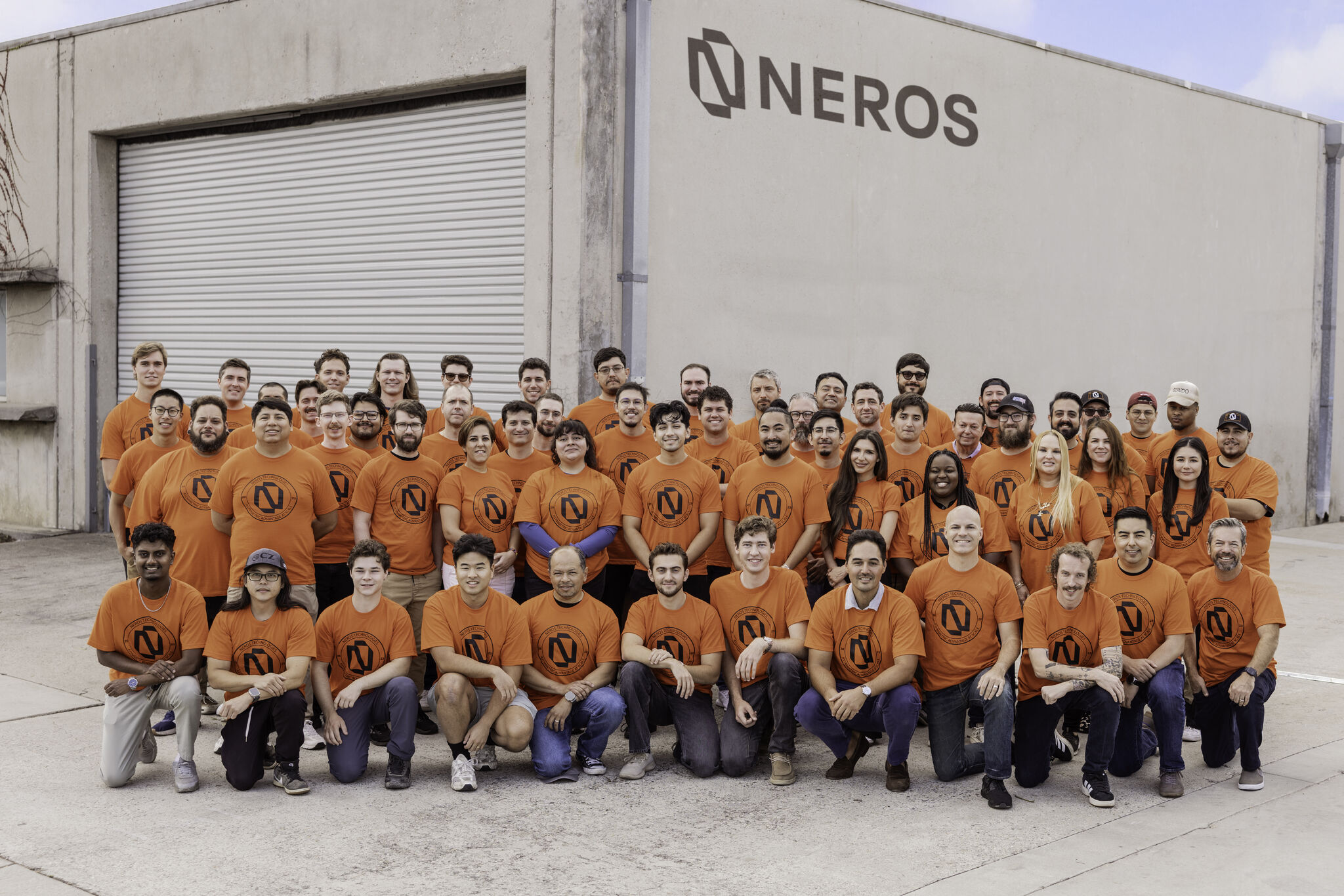
Lithuanian startup Granta Autonomy, which specializes in manufacturing EW-resistant UAVs, has delivered thousands of FPV and reconnaissance drones to Ukraine since the start of the full-scale invasion. According to the company, a large number of Ukrainian Armed Forces units are currently operating Granta Autonomy drone batteries, with the latest shipment to the front lines delivered in January.
The editorial team at Scroll.media spoke with Gediminas Guoba, CEO and co-founder of Granta Autonomy. As a former Lithuanian military engineer, he discussed his startup’s role in the Russia–Ukraine war and the lessons NATO should draw from it.

When and how did Granta Autonomy begin cooperating with the Ukrainian Defense Forces? Please tell us about the first batch of drones you delivered, how that shipment was funded, and what feedback you received.
Granta Autonomy began supplying UAVs to the Ukrainian front immediately following the full-scale invasion in March 2022. We are one of only a handful of suppliers that have remained active since then, consistently evolving our tech to meet the shifting demands of the conflict.
Our first shipment featured our second-generation Hornet, a small reconnaissance drone. Today, the Ukrainian army operates a full battery of our systems, including our new X-Wing, FPV quadcopters, and Hornet XR reconnaissance drones, which are funded by the Lithuanian and other European defense ministries.
Initially, detailed feedback was hard to come by, so I personally began visiting Ukraine alongside our specialists. We met directly with units on the ground to understand their needs in real time — a practice we continue to this day to ensure our technology stays ahead of the curve.
We met directly with units on the ground to understand their needs in real time — a practice we continue to this day to ensure our technology stays ahead of the curve.
What equipment have you provided to Ukraine so far, and in what quantities?
Since the start of the invasion, we have delivered hundreds of Hornets annually, upgrading to the third-generation Hornet XR in May 2023.
We are now scaling significantly; last year alone, we supplied hundreds of Hornet XRs and thousands of our GA-FPV quadcopters. This year, those deliveries will include the X-Wing loitering munition, which we expect to deliver in the thousands.
The X-Wing is our latest loitering munition, designed as the «shooter» to complement our Hornet XR «sensor.» It is a new-generation system that combines a quadcopter’s vertical take-off and landing (VTOL) with an airplane’s efficient fixed-wing flight, providing a 50 km range. The VTOL capability means it requires no launch infrastructure, allowing units to deploy multiple systems simultaneously from almost anywhere. The X-Wing is capable of operating in GNSS-denied environments and passed various tests in Ukraine to prove this last year.
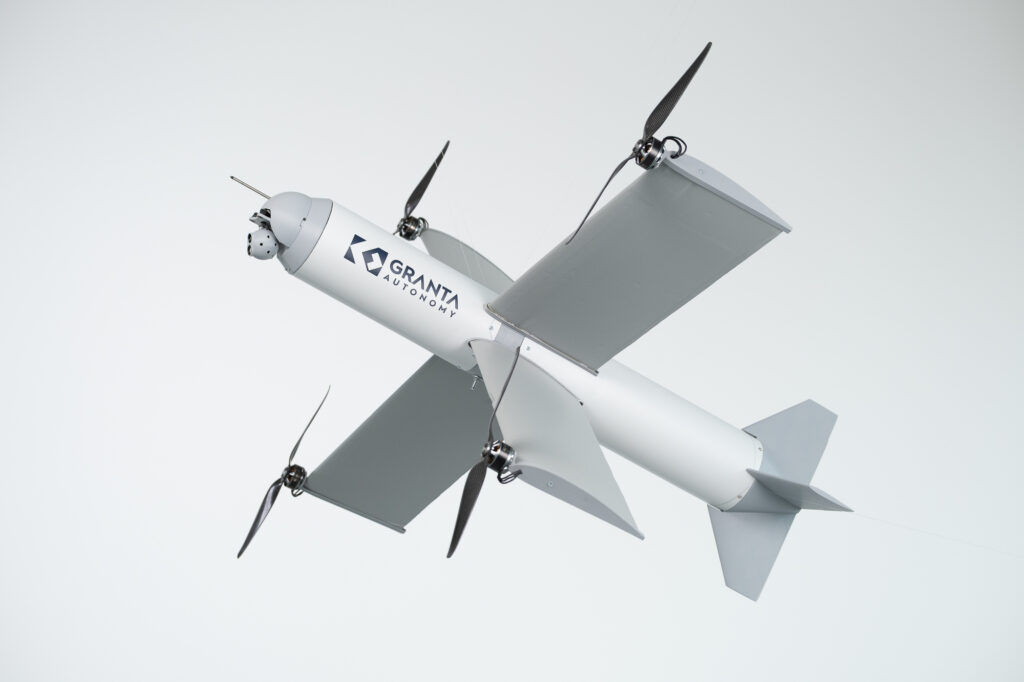
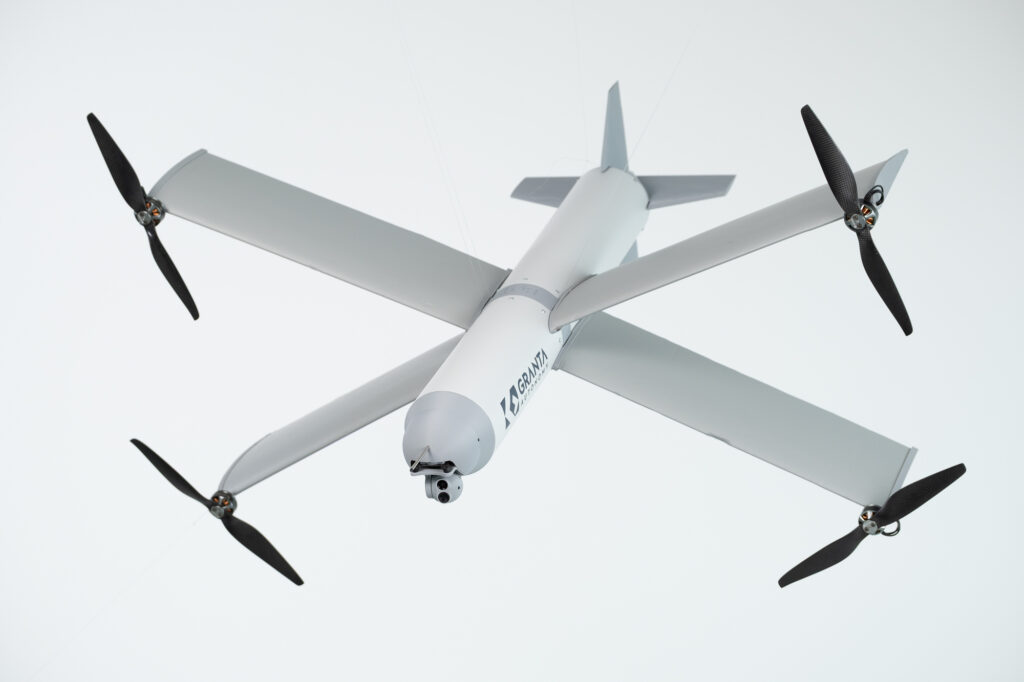
It is equipped with Granta’s own tailor-made micro gimbal system, featuring a powerful camera that can lock onto a target from more than 2 km away. The X-Wing carries a 4 kg hybrid warhead that can penetrate heavily armored vehicles while also producing a large number of fragments, making the UAV equally effective against heavy armor and soft targets such as radars and anti-aircraft systems.
The X-Wing’s design is a direct result of our battlefield-tested philosophy. We have taken the lessons learned from providing thousands of drones to the front lines in Ukraine and used that invaluable experience to create a sister system to our Hornet XR reconnaissance drone that is ideally suited for modern combat.
You mentioned that its development is already being tested in Ukraine. Can you explain how you cooperate with the Ukrainian military in testing new technologies? What is the value of their experience?
For us, it is crucial to travel to the front lines to conduct experiments and observe how our systems operate in real-world conditions. By testing alongside Ukrainian soldiers, we ensure our solutions are «battle-hardened» and fit for purpose.
Our Western partners highly value the advanced solutions born from this direct exposure; there is simply no substitute for testing technology in a high-intensity EW environment.
I read that in September 2025, the Lithuanian Ministry of Defense funded the delivery of 5,000 drones to Ukraine, and Granta Autonomy secured a €1M contract. How many drones have you already delivered within this initiative? Have there been any similar projects?
Indeed, Granta Autonomy was one of five Lithuanian manufacturers selected for that specific initiative. As part of that package, we sent a thousand drones to support the Ukrainian Defense Forces. We have also sent hundreds of drones as part of several similar projects since then.
In your opinion, what lessons should NATO draw from the war in Ukraine? How prepared do you think the alliance is for conflicts of this scale?
Based on our experience in drone applications, there are four critical takeaways for NATO:
- Mass Beats Perfection: Mass-produced, affordable drones are reshaping operations when paired with high-end equipment. Using thousands of «good enough» drones alongside a few «expert» systems creates powerful synergy. This combination offers commanders more flexibility and more options to achieve their objectives.
- Build an Ecosystem, Not Just Programs: Ukraine’s strength lies in its rapid feedback loop between soldiers and engineers. NATO must replicate this in its own procurement processes and decision-making.
- Rethink Air Defense: Shooting down cheap drones with expensive missiles is an economic trap. NATO needs layered counter-UAS systems: EW, kinetic guns, interceptor drones, as well as ways to counterattack their operators.
- Upskilling: Drone operation is a new combat arm. We must create dedicated drone schools and increase the number of operators capable of using various types of drones.
What Lessons Should NATO Learn from Ukraine’s War? — An Interview with the CEO of Granta Autonomy
Lithuanian startup Granta Autonomy, which specializes in manufacturing EW-resistant UAVs, has delivered thousands of FPV and reconnaissance drones to Ukraine since the start of the full-scale invasion. According to the company, a large number of Ukrainian Armed Forces units are currently operating Granta Autonomy drone batteries, with the latest shipment to the front lines delivered in January.
The editorial team at Scroll.media spoke with Gediminas Guoba, CEO and co-founder of Granta Autonomy. As a former Lithuanian military engineer, he discussed his startup’s role in the Russia–Ukraine war and the lessons NATO should draw from it.
When and how did Granta Autonomy begin cooperating with the Ukrainian Defense Forces? Please tell us about the first batch of drones you delivered, how that shipment was funded, and what feedback you received.
Granta Autonomy began supplying UAVs to the Ukrainian front immediately following the full-scale invasion in March 2022. We are one of only a handful of suppliers that have remained active since then, consistently evolving our tech to meet the shifting demands of the conflict.
Our first shipment featured our second-generation Hornet, a small reconnaissance drone. Today, the Ukrainian army operates a full battery of our systems, including our new X-Wing, FPV quadcopters, and Hornet XR reconnaissance drones, which are funded by the Lithuanian and other European defense ministries.
Initially, detailed feedback was hard to come by, so I personally began visiting Ukraine alongside our specialists. We met directly with units on the ground to understand their needs in real time — a practice we continue to this day to ensure our technology stays ahead of the curve.
We met directly with units on the ground to understand their needs in real time — a practice we continue to this day to ensure our technology stays ahead of the curve.
What equipment have you provided to Ukraine so far, and in what quantities?
Since the start of the invasion, we have delivered hundreds of Hornets annually, upgrading to the third-generation Hornet XR in May 2023.
We are now scaling significantly; last year alone, we supplied hundreds of Hornet XRs and thousands of our GA-FPV quadcopters. This year, those deliveries will include the X-Wing loitering munition, which we expect to deliver in the thousands.
The X-Wing is our latest loitering munition, designed as the «shooter» to complement our Hornet XR «sensor.» It is a new-generation system that combines a quadcopter’s vertical take-off and landing (VTOL) with an airplane’s efficient fixed-wing flight, providing a 50 km range. The VTOL capability means it requires no launch infrastructure, allowing units to deploy multiple systems simultaneously from almost anywhere. The X-Wing is capable of operating in GNSS-denied environments and passed various tests in Ukraine to prove this last year.
It is equipped with Granta’s own tailor-made micro gimbal system, featuring a powerful camera that can lock onto a target from more than 2 km away. The X-Wing carries a 4 kg hybrid warhead that can penetrate heavily armored vehicles while also producing a large number of fragments, making the UAV equally effective against heavy armor and soft targets such as radars and anti-aircraft systems.
The X-Wing’s design is a direct result of our battlefield-tested philosophy. We have taken the lessons learned from providing thousands of drones to the front lines in Ukraine and used that invaluable experience to create a sister system to our Hornet XR reconnaissance drone that is ideally suited for modern combat.
You mentioned that its development is already being tested in Ukraine. Can you explain how you cooperate with the Ukrainian military in testing new technologies? What is the value of their experience?
For us, it is crucial to travel to the front lines to conduct experiments and observe how our systems operate in real-world conditions. By testing alongside Ukrainian soldiers, we ensure our solutions are «battle-hardened» and fit for purpose.
Our Western partners highly value the advanced solutions born from this direct exposure; there is simply no substitute for testing technology in a high-intensity EW environment.
I read that in September 2025, the Lithuanian Ministry of Defense funded the delivery of 5,000 drones to Ukraine, and Granta Autonomy secured a €1M contract. How many drones have you already delivered within this initiative? Have there been any similar projects?
Indeed, Granta Autonomy was one of five Lithuanian manufacturers selected for that specific initiative. As part of that package, we sent a thousand drones to support the Ukrainian Defense Forces. We have also sent hundreds of drones as part of several similar projects since then.
In your opinion, what lessons should NATO draw from the war in Ukraine? How prepared do you think the alliance is for conflicts of this scale?
Based on our experience in drone applications, there are four critical takeaways for NATO:
- Mass Beats Perfection: Mass-produced, affordable drones are reshaping operations when paired with high-end equipment. Using thousands of «good enough» drones alongside a few «expert» systems creates powerful synergy. This combination offers commanders more flexibility and more options to achieve their objectives.
- Build an Ecosystem, Not Just Programs: Ukraine’s strength lies in its rapid feedback loop between soldiers and engineers. NATO must replicate this in its own procurement processes and decision-making.
- Rethink Air Defense: Shooting down cheap drones with expensive missiles is an economic trap. NATO needs layered counter-UAS systems: EW, kinetic guns, interceptor drones, as well as ways to counterattack their operators.
- Upskilling: Drone operation is a new combat arm. We must create dedicated drone schools and increase the number of operators capable of using various types of drones.