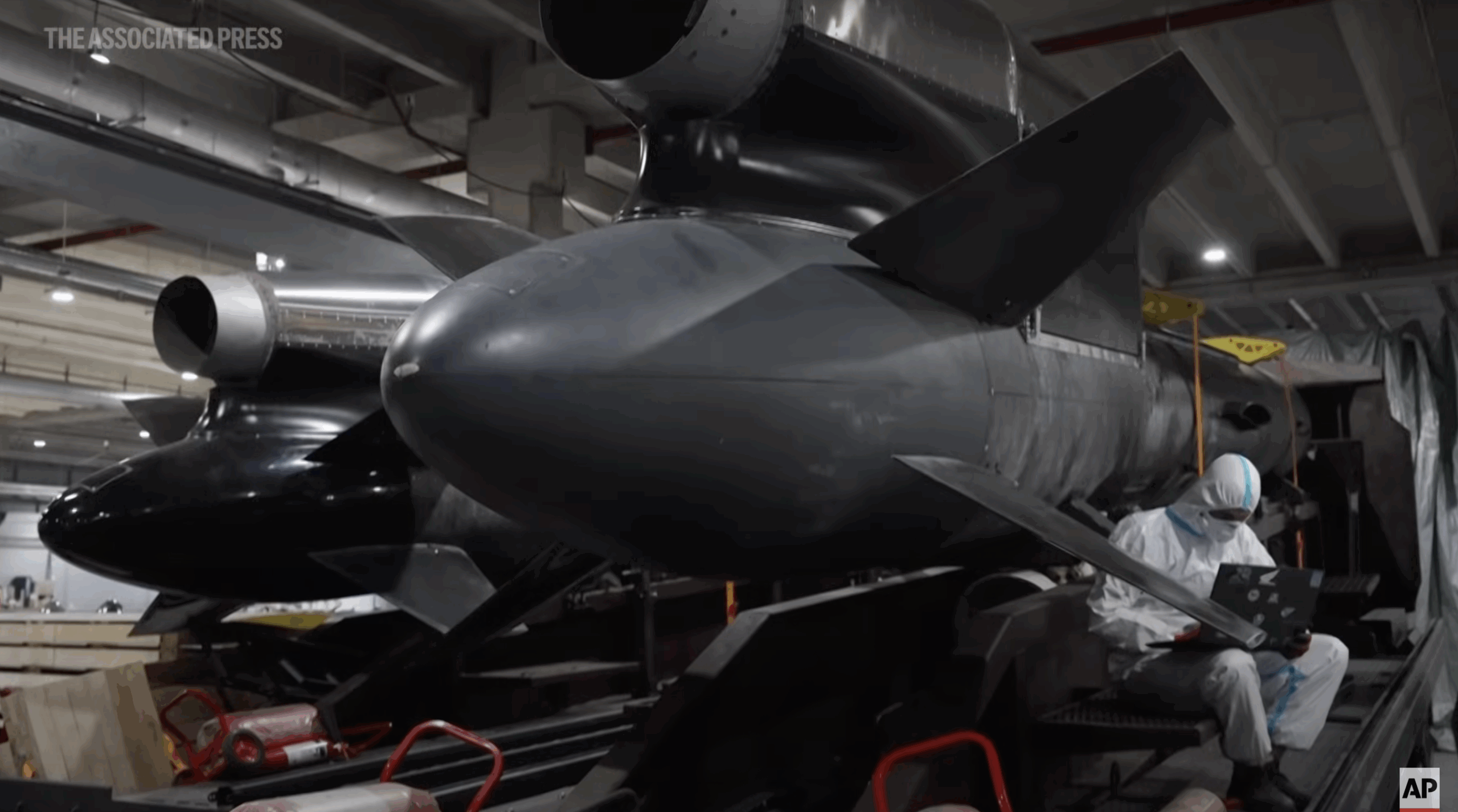
The Valley Is Turning Toward Defense: How the Network VC Group Operates and Invests

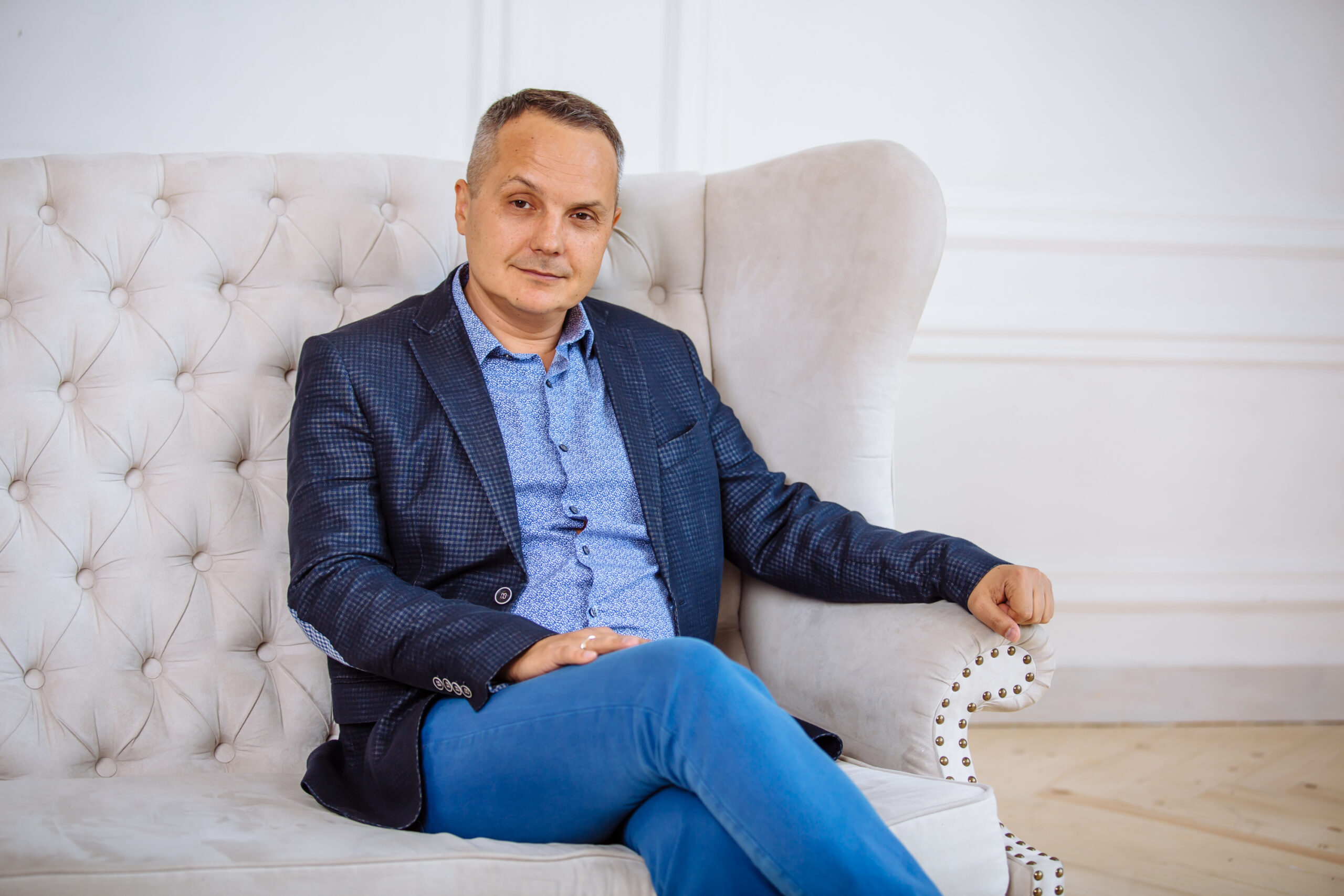
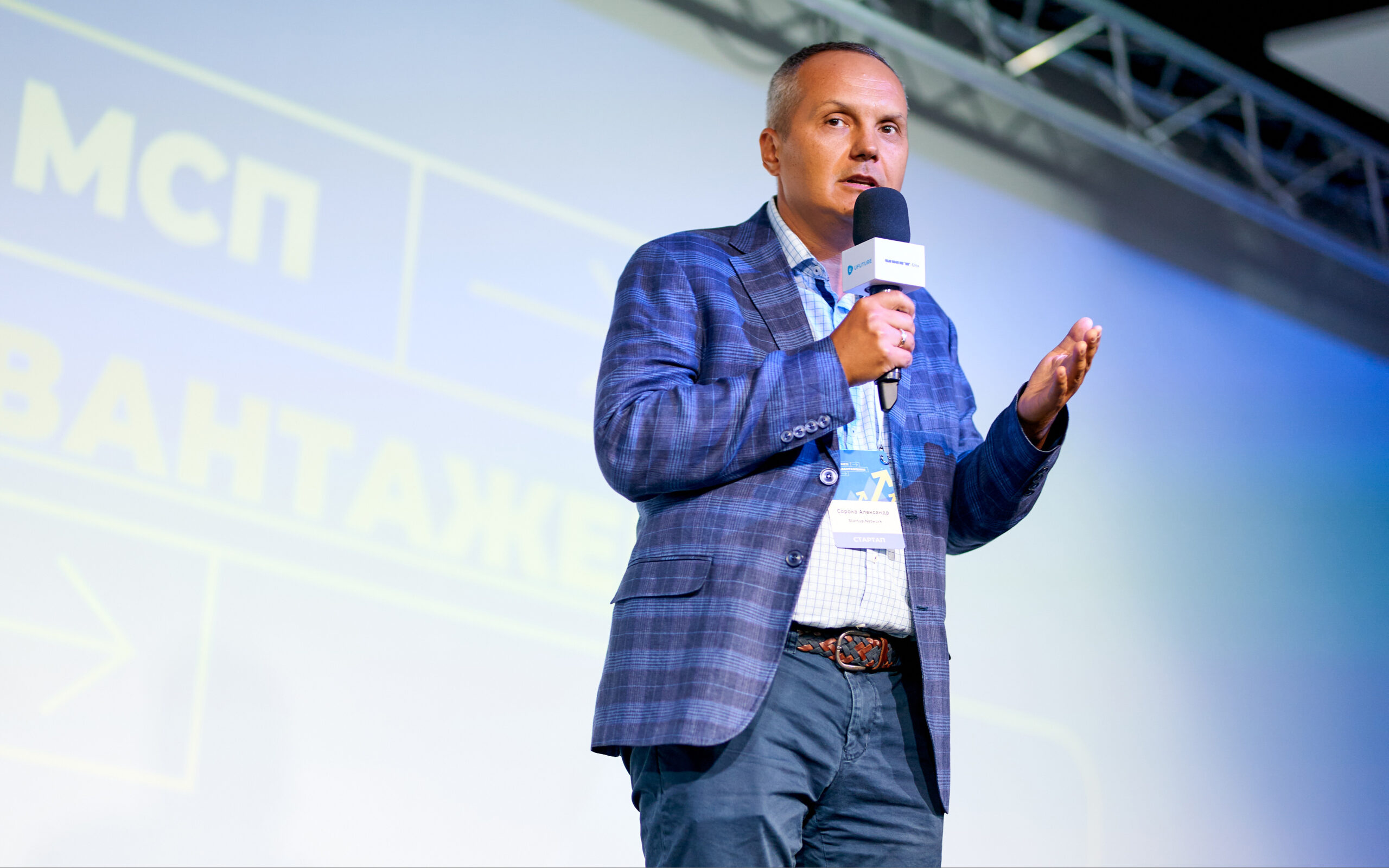
The American-Ukrainian Network VC has been a regular investor in Silicon Valley, and, more recently, in Ukrainian defense technology. The group of funds and syndicates was founded by Oleksandr Soroka, well-known in Ukraine for launching Startup.Network, which until 2015 regularly hosted demo days in Kyiv to connect young innovators with angel investors.
Today, Soroka is building a broad network of venture initiatives, running events, organizing communities, and actively investing in US startups. His fund portfolio already includes around 100 companies, with about 20% having Ukrainian roots.
Scroll.media spoke with Soroka about how the Network VC ecosystem works, how its funds invest, and why he believes it’s impossible to build a Silicon Valley in Ukraine.
Tell us about Network VC. How did it appear, and what does it represent?
From 2010 to 2015, I tried to build a Silicon Valley in Ukraine. And then I realized what I now call the curse of small and medium-sized economies. This applies not only to Ukraine but also to Austria, Nigeria, Thailand, and others. Even countries like Germany or France don’t have a large enough free market to build a Valley. The percentage of unicorns that appear there is 1–2% of the world per year. I realized we needed to move into the Big World.
We registered a company in the US, and it’s still operating. Initially, we worked closely with investors, helping startups raise capital. In 2017, we launched our Unicorn Battles events and have now held 500 events in 55 countries. This helped us build a global network. And in 2019, we launched our first venture fund.
What funds and organizations operate under the Network VC umbrella?
We invest through both syndicates and individual small funds, mostly at seed to Series A.
In syndicates, we invest at late seed or Series A. A startup should already have $1 million in sales or a reputable American VC co-investing with us.
We also create small, specialized funds for specific verticals. We now have our fourth fund focused on Y Combinator startups. And this fall, we launched our first fund investing in Andreessen Horowitz Speedrun graduates. We’ve already invested in three companies, with a strong focus on games, media, and social networks. The stages are later, so checks are larger. Soon, we’ll launch a Longevity Fund focused on life-extension technologies.
We have the Oppenheimer fund, which is focused on the defense industry. We created a separate brand for it, because it’s a very specific direction. Here we run both syndicates and an acceleration program for Ukrainian startups in the US.
We run the Startup.Network platform, where about 50,000 startups are registered. It’s an open platform, like LinkedIn for startups. We also have our own syndicate platform, Startup.Inc (similar to AngelList), where accredited investors can invest directly. And we run the VC House club, where we gather, exchange deals, and more.
These are the main elements of our ecosystem. The business is genuinely complex: you have to raise money, then invest wisely, and then wait another 5–7 years for an exit. That’s why we develop several funds in parallel.

How many startups do you have in the portfolio? How many are Ukrainian?
Today, we have around 100 startups in our portfolio, 90% of them in the US. Several have reached unicorn valuations.
In the defense industry, we have 13 Ukrainian or Ukrainian-American startups. For example, Bavovna — the team is here, one founder is Ukrainian and the other American.
When it comes to civilian startups, approximately 20% of our portfolio has Ukrainian roots.
What are the sizes of your focus funds? Do you raise fixed capital, or does it vary?
We are constantly fundraising for new funds. This season, we get a new pool of investors. Some are returning LPs, but the pool constantly updates.
Usually, these funds are up to $1 million.
What is the life cycle of the fund? How many deals does it make?
Sometimes exits happen in a year — that recently happened to us. However, typically, it’s 5–10 years. For later-stage funds, it’s 3–7. As soon as we exit, we distribute returns. But overall, these are long-term investments.
For our small focus funds, we make 3–10 deals. Sometimes three, sometimes ten.
What is your average check?
Generally, our check sizes are up to $500,000 per startup. A thematic fund may invest from a few tens of thousands up to $100,000. A syndicate invests from $100,000 to $500,000.
Oppenheimer invests mainly in Ukrainian defense startups. Is this intentional, or dictated by the market?
American defense startups have a harder time competing. They have access to big accelerators. For example, YC immediately grants $500,000. They want bigger checks and higher valuations.
A typical YC startup emerging from the batch may not even have a product, but it is already raising at a $50 million valuation. In Ukraine, that would be a Series A valuation.
Even so, Ukrainian startups are often technologically ahead, despite having lower valuations. But they need to break into the European and American markets and raise money. If two teams have similar ideas, and one raises significantly more, that team will hire the best specialists. Building a business only on the Ukrainian market is dangerous. The biggest issue for Ukrainian defense startups right now is export restrictions.
But we also invest in American defense tech. We invested in cryogenic engines for satellites so they can dodge Chinese missiles in space. We invested in a fusion reactor for ships. And we’re now entering another space startup.
Do you have exits already? What are the results?
Yes. Interestingly, we had an exit from the biotech startup Volumentric within a year, which is an extremely fast turnaround. They 3D-print human organs. We invested in 2020, and in 2021 it was acquired. It was a 3x exit, although it should have been much larger. The full deal was supposed to be $400 million if all milestones were met, but only $45 million has been paid so far. Yes, this is a complex business 🙂
There were also less successful exits. For example, with Elai we exited one-to-one.
Where are your LPs from? Are there Ukrainians?
Overall, we have investors from 20 countries — Europe, Malaysia, the UAE, the US, and many more. And yes, many Ukrainians. Mostly private investors or small family offices.
In total, we have thousands of registered investors. Actively investing — around one hundred.
What is the entry threshold for investors?
For syndicates, usually $10,000. For funds, typically $25,000.
Do you have an office or representative in Ukraine?
Oppenheimer has a partner in Ukraine who represents us. So yes.
How do Network VC and Oppenheimer Acceleration select startups?
Our approach to evaluating startups differs between seed and Series A.
At seed, it’s usually two or three engineers — not businesspeople. Ukrainian founders often misunderstand this. A single business-oriented founder who hires a couple of developers is not enough. US investors (and we) invest in core technology, not in business models. There must be real innovation at the heart of the startup.
At later rounds, traction is the first metric: whether it exists, how big it is, and how fast it’s growing. In syndicates, we follow the «$1 million strategy» — the startup must already have at least $1 million in revenue or have US VCs who invested at least $1 million.
At seed, we use the «3 Ts»: Team, Technology, or Traction. If there’s no traction yet, the key is whether the team can actually build what they plan. If founders come from Stanford, Harvard, or MIT, that adds credibility.
For Ukrainian defense startups, the selection is similar, but with a few «no’s.» First, we rarely invest in hardware, whereas most Ukrainian defense startups focus on developing hardware. Second, we prefer teams physically based in the US, because fundraising and customer development must happen here. Mixed teams, where one founder is based in Ukraine and the other in the US, are more desirable for investment.
Still, we make exceptions if we see strong potential. We also have the defense accelerator, where we provide initial checks even before a working product is developed — although that’s a risk.
Why did you decide to go into defense?
Three weeks ago, I was at a conference at Stanford where Marc Andreessen, head of Andreessen Horowitz, spoke. You rarely see him, and he talked about the huge opportunities in this market.
There’s a broader shift toward defense in the US. The Stanford Research Institute, which now primarily works for DARPA, was formerly part of Stanford. However, in the 1970s, students protested against working with defense, and it became a separate entity. Now Stanford is returning to defense and hosting defense conferences again.
In general, the Valley is returning to its origins. And it began with defense.
During the Cold War, the Soviet Union poured unlimited funds into military tech. The US didn’t — so they started multiplying the check by five if it was defense. That’s the real history.
How quickly do you close deals?
It depends. At Series A, if there’s a lead investor, deals are fast. No one waits for you — money is abundant in the Valley. Decisions can be made in a day. If there’s a major investor leading the round, due diligence is already done. Risks are minimal.
At seed, it takes longer. It can be a month because there’s nothing to rely on. No traction. Maybe technology — but does it work? You need expert checks.
But there are exceptions. For example, Y Combinator built a machine that stamps out startups, and investors line up to fund them. If you want in, you must move quickly. YC uses standard SAFE agreements, simple legal terms, founders from top universities, and its own stamp of approval. So we look, talk, let founders go, discuss, and make a quick decision. Otherwise you simply miss the deal.
Interestingly, YC has also started investing in defense…
Yes. YC is basically vacuuming up talent from Europe. Previously, there were more American teams. Now Oxford and Cambridge. Europe moves much slower, and here everything happens in a flash — launch, funding…
When I see robotics teams at YC, they’re often immigrants from China. Smart people don’t want closed systems; that’s why they come here.
Many students now drop out of universities to go to YC. Instead of paying half a million to the university, YC gives you half a million.
California is an ecosystem uniquely tolerant of different lifestyles. Prodigies from all over the world come here to unlock their potential. I don’t see any way to compete with the Valley right now.
The Valley Is Turning Toward Defense: How the Network VC Group Operates and Invests
The American-Ukrainian Network VC has been a regular investor in Silicon Valley, and, more recently, in Ukrainian defense technology. The group of funds and syndicates was founded by Oleksandr Soroka, well-known in Ukraine for launching Startup.Network, which until 2015 regularly hosted demo days in Kyiv to connect young innovators with angel investors.
Today, Soroka is building a broad network of venture initiatives, running events, organizing communities, and actively investing in US startups. His fund portfolio already includes around 100 companies, with about 20% having Ukrainian roots.
Scroll.media spoke with Soroka about how the Network VC ecosystem works, how its funds invest, and why he believes it’s impossible to build a Silicon Valley in Ukraine.
Tell us about Network VC. How did it appear, and what does it represent?
From 2010 to 2015, I tried to build a Silicon Valley in Ukraine. And then I realized what I now call the curse of small and medium-sized economies. This applies not only to Ukraine but also to Austria, Nigeria, Thailand, and others. Even countries like Germany or France don’t have a large enough free market to build a Valley. The percentage of unicorns that appear there is 1–2% of the world per year. I realized we needed to move into the Big World.
We registered a company in the US, and it’s still operating. Initially, we worked closely with investors, helping startups raise capital. In 2017, we launched our Unicorn Battles events and have now held 500 events in 55 countries. This helped us build a global network. And in 2019, we launched our first venture fund.
What funds and organizations operate under the Network VC umbrella?
We invest through both syndicates and individual small funds, mostly at seed to Series A.
In syndicates, we invest at late seed or Series A. A startup should already have $1 million in sales or a reputable American VC co-investing with us.
We also create small, specialized funds for specific verticals. We now have our fourth fund focused on Y Combinator startups. And this fall, we launched our first fund investing in Andreessen Horowitz Speedrun graduates. We’ve already invested in three companies, with a strong focus on games, media, and social networks. The stages are later, so checks are larger. Soon, we’ll launch a Longevity Fund focused on life-extension technologies.
We have the Oppenheimer fund, which is focused on the defense industry. We created a separate brand for it, because it’s a very specific direction. Here we run both syndicates and an acceleration program for Ukrainian startups in the US.
We run the Startup.Network platform, where about 50,000 startups are registered. It’s an open platform, like LinkedIn for startups. We also have our own syndicate platform, Startup.Inc (similar to AngelList), where accredited investors can invest directly. And we run the VC House club, where we gather, exchange deals, and more.
These are the main elements of our ecosystem. The business is genuinely complex: you have to raise money, then invest wisely, and then wait another 5–7 years for an exit. That’s why we develop several funds in parallel.
How many startups do you have in the portfolio? How many are Ukrainian?
Today, we have around 100 startups in our portfolio, 90% of them in the US. Several have reached unicorn valuations.
In the defense industry, we have 13 Ukrainian or Ukrainian-American startups. For example, Bavovna — the team is here, one founder is Ukrainian and the other American.
When it comes to civilian startups, approximately 20% of our portfolio has Ukrainian roots.
What are the sizes of your focus funds? Do you raise fixed capital, or does it vary?
We are constantly fundraising for new funds. This season, we get a new pool of investors. Some are returning LPs, but the pool constantly updates.
Usually, these funds are up to $1 million.
What is the life cycle of the fund? How many deals does it make?
Sometimes exits happen in a year — that recently happened to us. However, typically, it’s 5–10 years. For later-stage funds, it’s 3–7. As soon as we exit, we distribute returns. But overall, these are long-term investments.
For our small focus funds, we make 3–10 deals. Sometimes three, sometimes ten.
What is your average check?
Generally, our check sizes are up to $500,000 per startup. A thematic fund may invest from a few tens of thousands up to $100,000. A syndicate invests from $100,000 to $500,000.
Oppenheimer invests mainly in Ukrainian defense startups. Is this intentional, or dictated by the market?
American defense startups have a harder time competing. They have access to big accelerators. For example, YC immediately grants $500,000. They want bigger checks and higher valuations.
A typical YC startup emerging from the batch may not even have a product, but it is already raising at a $50 million valuation. In Ukraine, that would be a Series A valuation.
Even so, Ukrainian startups are often technologically ahead, despite having lower valuations. But they need to break into the European and American markets and raise money. If two teams have similar ideas, and one raises significantly more, that team will hire the best specialists. Building a business only on the Ukrainian market is dangerous. The biggest issue for Ukrainian defense startups right now is export restrictions.
But we also invest in American defense tech. We invested in cryogenic engines for satellites so they can dodge Chinese missiles in space. We invested in a fusion reactor for ships. And we’re now entering another space startup.
Do you have exits already? What are the results?
Yes. Interestingly, we had an exit from the biotech startup Volumentric within a year, which is an extremely fast turnaround. They 3D-print human organs. We invested in 2020, and in 2021 it was acquired. It was a 3x exit, although it should have been much larger. The full deal was supposed to be $400 million if all milestones were met, but only $45 million has been paid so far. Yes, this is a complex business 🙂
There were also less successful exits. For example, with Elai we exited one-to-one.
Where are your LPs from? Are there Ukrainians?
Overall, we have investors from 20 countries — Europe, Malaysia, the UAE, the US, and many more. And yes, many Ukrainians. Mostly private investors or small family offices.
In total, we have thousands of registered investors. Actively investing — around one hundred.
What is the entry threshold for investors?
For syndicates, usually $10,000. For funds, typically $25,000.
Do you have an office or representative in Ukraine?
Oppenheimer has a partner in Ukraine who represents us. So yes.
How do Network VC and Oppenheimer Acceleration select startups?
Our approach to evaluating startups differs between seed and Series A.
At seed, it’s usually two or three engineers — not businesspeople. Ukrainian founders often misunderstand this. A single business-oriented founder who hires a couple of developers is not enough. US investors (and we) invest in core technology, not in business models. There must be real innovation at the heart of the startup.
At later rounds, traction is the first metric: whether it exists, how big it is, and how fast it’s growing. In syndicates, we follow the «$1 million strategy» — the startup must already have at least $1 million in revenue or have US VCs who invested at least $1 million.
At seed, we use the «3 Ts»: Team, Technology, or Traction. If there’s no traction yet, the key is whether the team can actually build what they plan. If founders come from Stanford, Harvard, or MIT, that adds credibility.
For Ukrainian defense startups, the selection is similar, but with a few «no’s.» First, we rarely invest in hardware, whereas most Ukrainian defense startups focus on developing hardware. Second, we prefer teams physically based in the US, because fundraising and customer development must happen here. Mixed teams, where one founder is based in Ukraine and the other in the US, are more desirable for investment.
Still, we make exceptions if we see strong potential. We also have the defense accelerator, where we provide initial checks even before a working product is developed — although that’s a risk.
Why did you decide to go into defense?
Three weeks ago, I was at a conference at Stanford where Marc Andreessen, head of Andreessen Horowitz, spoke. You rarely see him, and he talked about the huge opportunities in this market.
There’s a broader shift toward defense in the US. The Stanford Research Institute, which now primarily works for DARPA, was formerly part of Stanford. However, in the 1970s, students protested against working with defense, and it became a separate entity. Now Stanford is returning to defense and hosting defense conferences again.
In general, the Valley is returning to its origins. And it began with defense.
During the Cold War, the Soviet Union poured unlimited funds into military tech. The US didn’t — so they started multiplying the check by five if it was defense. That’s the real history.
How quickly do you close deals?
It depends. At Series A, if there’s a lead investor, deals are fast. No one waits for you — money is abundant in the Valley. Decisions can be made in a day. If there’s a major investor leading the round, due diligence is already done. Risks are minimal.
At seed, it takes longer. It can be a month because there’s nothing to rely on. No traction. Maybe technology — but does it work? You need expert checks.
But there are exceptions. For example, Y Combinator built a machine that stamps out startups, and investors line up to fund them. If you want in, you must move quickly. YC uses standard SAFE agreements, simple legal terms, founders from top universities, and its own stamp of approval. So we look, talk, let founders go, discuss, and make a quick decision. Otherwise you simply miss the deal.
Interestingly, YC has also started investing in defense…
Yes. YC is basically vacuuming up talent from Europe. Previously, there were more American teams. Now Oxford and Cambridge. Europe moves much slower, and here everything happens in a flash — launch, funding…
When I see robotics teams at YC, they’re often immigrants from China. Smart people don’t want closed systems; that’s why they come here.
Many students now drop out of universities to go to YC. Instead of paying half a million to the university, YC gives you half a million.
California is an ecosystem uniquely tolerant of different lifestyles. Prodigies from all over the world come here to unlock their potential. I don’t see any way to compete with the Valley right now.