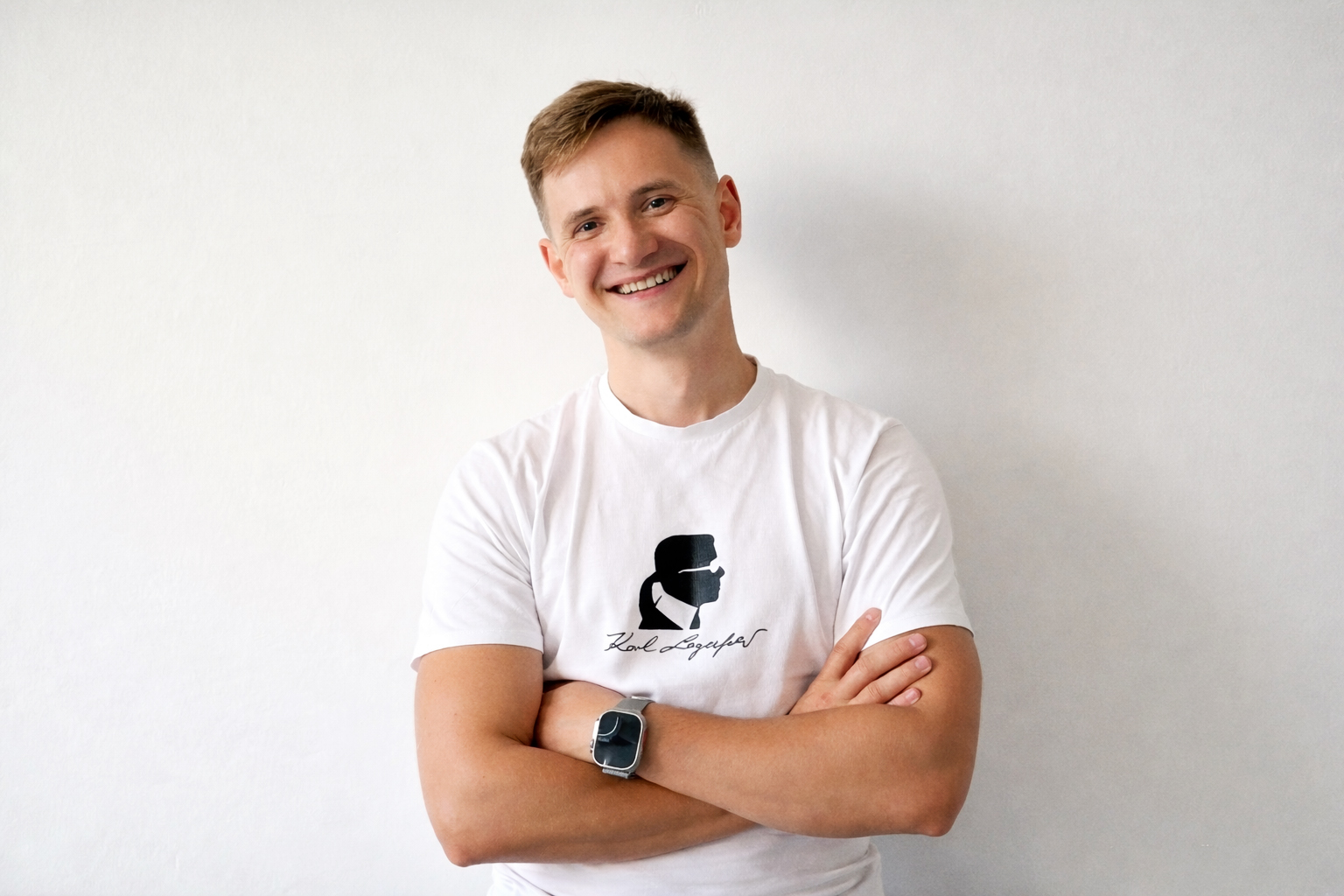
Andriy Sambir wasn’t particularly lucky with one of his first clients. In the client’s view, the brand-new website was supposed to immediately appear on the first page of Google search results — somewhere in the top one or two positions. «If you don’t give me my money back, I’ll have my connections go after you,» Andriy recalls the client saying, now laughing. «Apparently, I failed to explain at the start of our collaboration that building a $300 business-card website wouldn’t instantly generate a million leads.»
Sambir no longer worked with that Lviv client. Instead, he went on to build a portfolio of hundreds of clients worldwide, with a primary focus on the US and Europe. His work includes projects for Porsche, Reverso, TATA, and Bosch. Over the past three years, his team has won Red Dot, Webby, A’Design Award, and POPDES Top Designers awards. A personal point of pride for Sambir is the DOU recognition as one of the best workplaces among small companies.
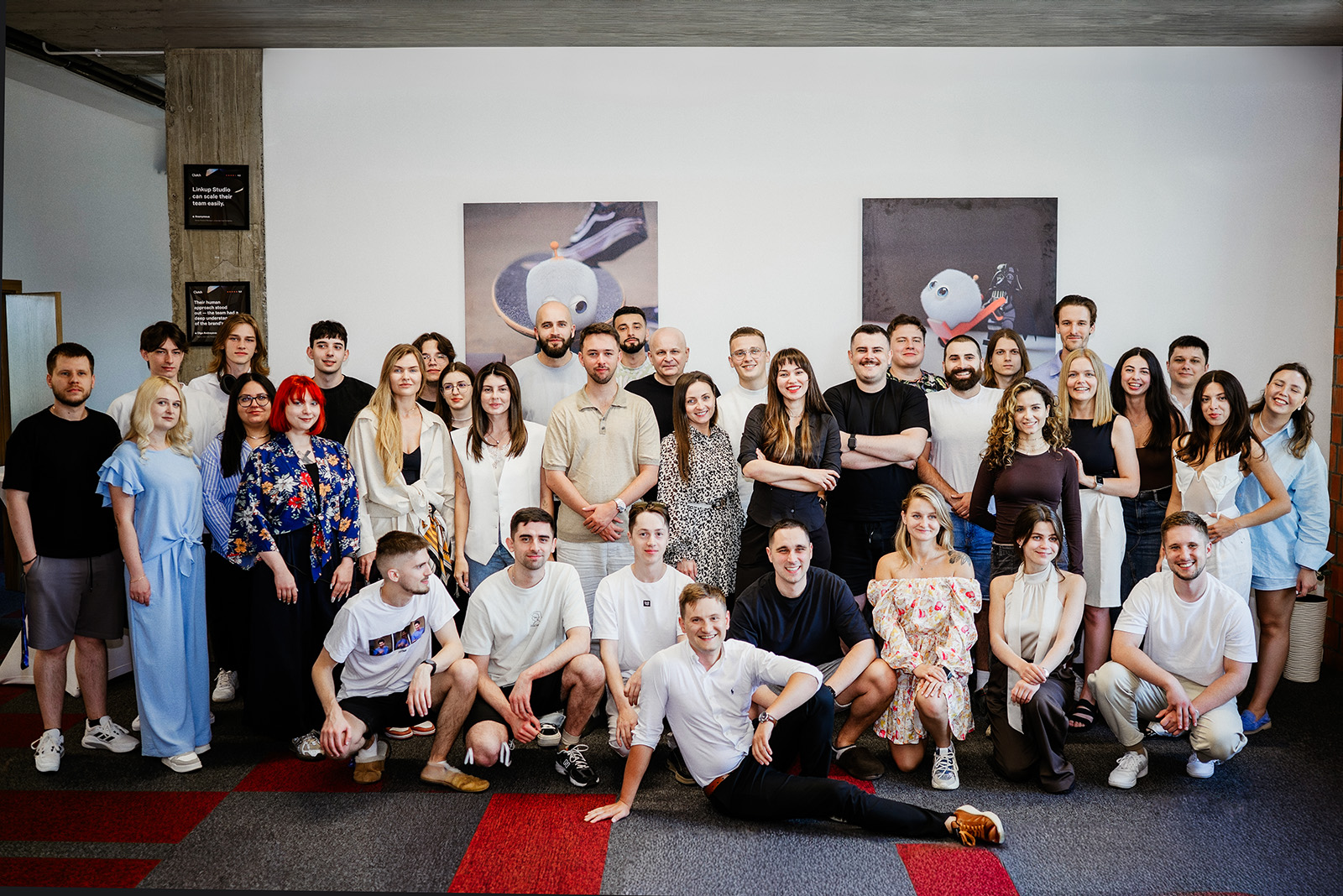
Linkup ST has a team of just over 70 people. Sambir sees no reason to grow for the sake of headcount: modern tools automate much of the process, and hiring simply to expand the team no longer makes sense. «This doesn’t mean we won’t hire,» he says. «A few years ago, we had 110 people. Today, we have 73, and our revenue has only grown.»
Andriy’s main goal is to transform the business into a full-fledged, high-quality consulting service capable of covering a wide range of client needs. Having started with classic outsourcing, Sambir is very clear about what he’s moving away from and what he’s moving toward.
«The logic of consulting is: let’s figure out the client’s actual pain points, pick an off-the-shelf CRM, add 10% of custom code to cover the unique case, and that’s it. The logic of outsourcing is: let’s build our own CRM from scratch. I want to solve real problems,» Sambir explains. «The big problem with consultants is that they talk a lot but can do very little. We can actually build what we talk about.»
Linkup ST’s areas of expertise include software, design, and marketing. Each department can operate independently or together with the others. The Red Dot awards, for example, come from the design department — a standalone team competing with design studios in Ukraine and globally. In a traditional outsourcing company, teams like design are just a supporting function in the development pipeline. At Linkup ST, depending on the client’s needs, they can provide either a single service or the full 360° scope.
«Honestly, I don’t like all this bullshit about ‘we are the client’s partner,’ so let me explain it differently,» Sambir says. «If a business needs leads, our marketing team steps in. If we see that software changes are needed to improve processes, we do that. If you’re a startup, we’ll help you build an MVP, raise a round, and then, if everything works, bring in marketing. This isn’t an activity for the sake of activity. We see the logical path of how a specific product should evolve, and we help with that.»
As an example, Sambir points to Linkup ST’s collaboration with Reverso, one of the world’s largest translation platforms. During the partnership, the audience grew from 30 million to 60 million users. Linkup ST is responsible for the project’s entire design system. «Let me explain what we do. If you go to Reverso, it doesn’t look like the platform was designed by Jony Ive. And yet, the number of users keeps growing. That’s the difference. A typical design studio would say, ‘Let’s redesign everything to make it beautiful.’ We said, ‘Let’s make it so that more users would use it, and pay for it.’»
Throughout our conversation, Andriy is straightforward and doesn’t try to sugarcoat his words. He doesn’t hide the fact that building this «Digital McKinsey» is still a work in progress. And although he doesn’t like talking about outsourcing, he openly admits that this is where he started and where he spent more than half of his 12 years in business. So what triggered the shift?
A new reality
In 2022, Linkup Studio brought in an investor: Vitalii Gorovyi from InSoft Partners acquired a minority stake in the business. The exact terms were not disclosed, but in 2025, it became known that Gorovyi had increased his share to 45%. The remaining stake belongs to Sambir.
During one of their conversations, Sambir recalls, Gorovyi bluntly told him, «You’re an outsourcing company.»
«I started arguing loudly that we create products and all that. And when he asked to see ‘our product,’ I said he just didn’t understand and that we build products for others. But he was obviously right,» Sambir says.
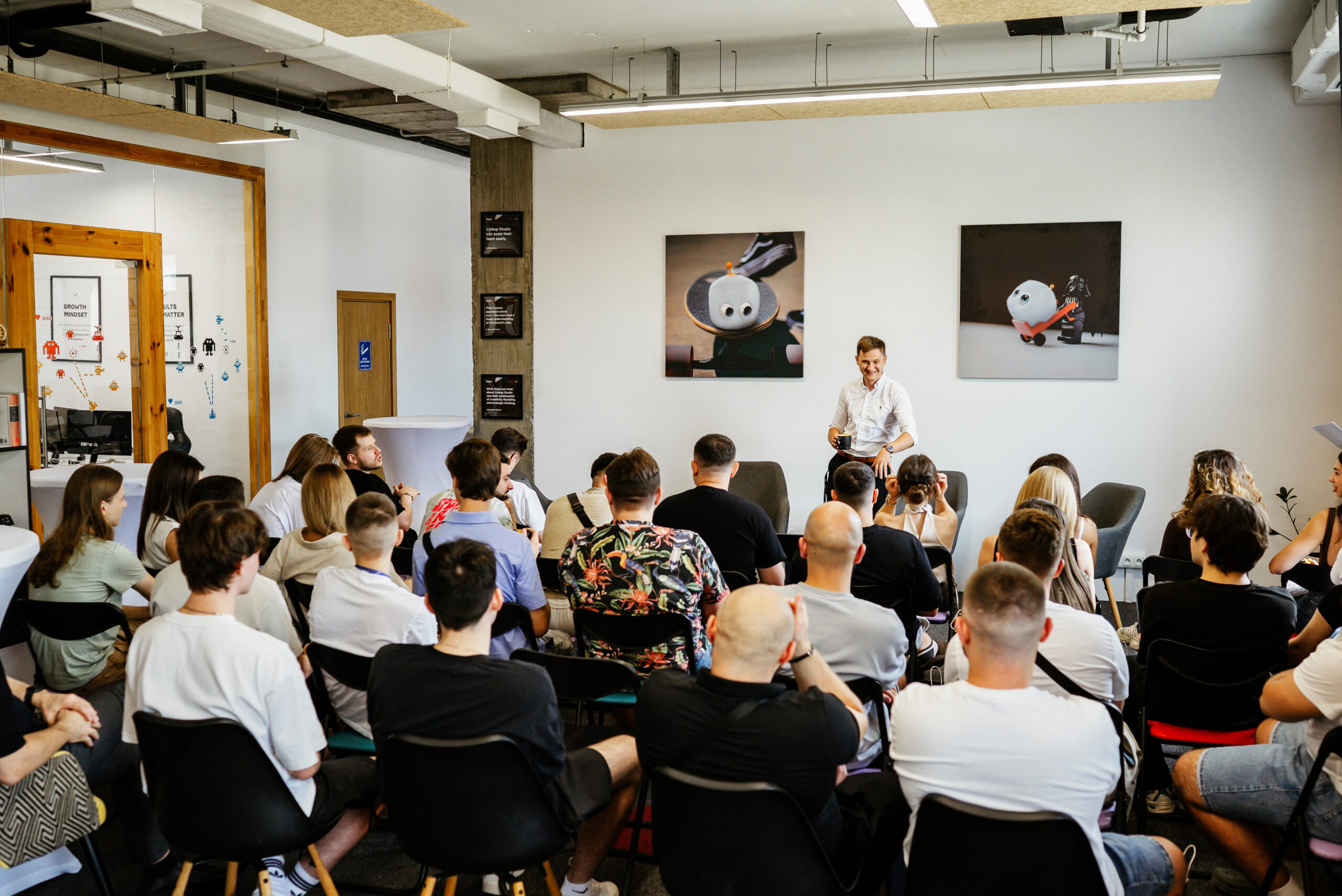
«To come to terms with it, I had to go through all five stages — denial, anger, bargaining, depression, and acceptance.» Still, Sambir says, that conversation became the foundation that today allows him not to look for a buyer for his business, but to be someone ready for the challenges of a new era.
«I don’t know why anyone thinks Ukraine is somehow better than Poland or India when it comes to outsourcing. India is devouring everyone and everything. A business that wants to survive has to offer more,» Sambir says. This realization became the very push toward building a consulting model. «I see that the typical outsourcing offer is running out of steam. That’s why we’re moving in a new direction.»
As our conversation gradually turns into a debate, I ask why he believes Ukraine could compete with India in consulting, a field that is also well developed there.
Sambir explains it this way: outsourcing is helpful when there simply aren’t enough people to do the work. Hypothetically, once everyone has been hired in India, companies come to Ukraine, where the quality is supposedly higher. The key factor here is a well-formed demand: everyone knows what they want and just needs someone to execute. «But now the situation is different — there’s a lot of UNFORMED demand in the market,» he says.

In a world buzzing with AI, everyone wants it, but very few truly understand what that AI should look like or what it should deliver to the business. «It’s great that you have five programmers. But what exactly should they build? It’s like you’ve been playing classic poker your whole life, and suddenly you’re dealt not five cards, but ten. What do you do with that? Our strength is that we know what to do with it.»