From Earth to Orbit: The Ukrainian Tech Behind NASA’s New Space Cooking Innovation

Can you imagine cooking pizza in space? Or making an omelet or a lemon pie? What sounded like science fiction not long ago has become reality. And the team of Ukrainian developers at JetSoftPro helped make it possible, working closely with Jim Sears, founder of Ascent Technology and the original visionary behind SATED Space’s device.
But first, a bit of background. In 2021, NASA and the Canadian Space Agency (CSA) announced the Deep Space Food Challenge. The goal was to find innovative technologies that would allow cooking in space without gravity, fresh ingredients, or regular kitchen conditions. This was not only about crew comfort but also about maintaining physical and psychological health during long missions.
Three years later, the judges selected its finalists. One of them was SATED Space, a kitchen appliance designed for astronauts. The story of this device is also the story of the Ukrainian company JetSoftPro and the collaboration between its engineering team and Jim Sears, whose concept and hardware leadership shaped the direction of the project.
An American Client and a Ukrainian Team
JetSoftPro is a Ukrainian IT company with a 20-year history. Its team of more than 200 specialists works with clients across the United States, Europe, and Asia. The company focuses on automation, artificial intelligence, and, more recently, space tech.
In 2024, Jim Sears and his company, SATED Space from Boulder, Colorado, approached JetSoftPro. Jim, an engineer with deep hardware expertise and experience in advanced R&D, was looking for partners who could develop the software for his SATED prototype. The idea was to create a compact device capable of cooking food in microgravity using minimal resources.
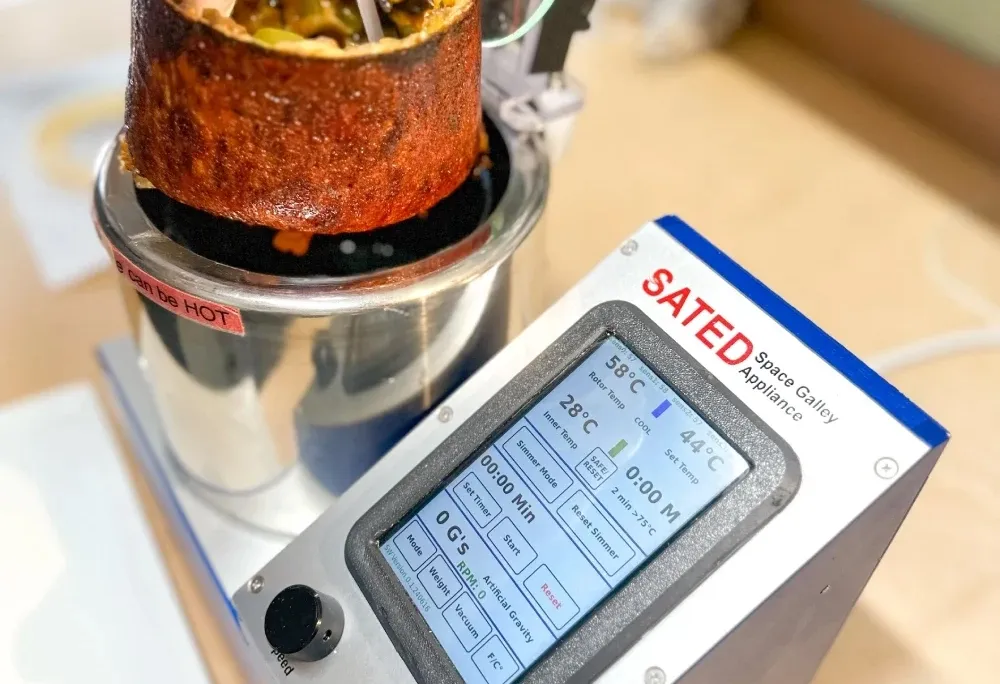
The project was named SATED (Safe Appliance, Tidy, Efficient & Delicious). The Ukrainian team was responsible for developing the embedded software that would control the device and the graphical user interface.
How a SATED Space Device Works
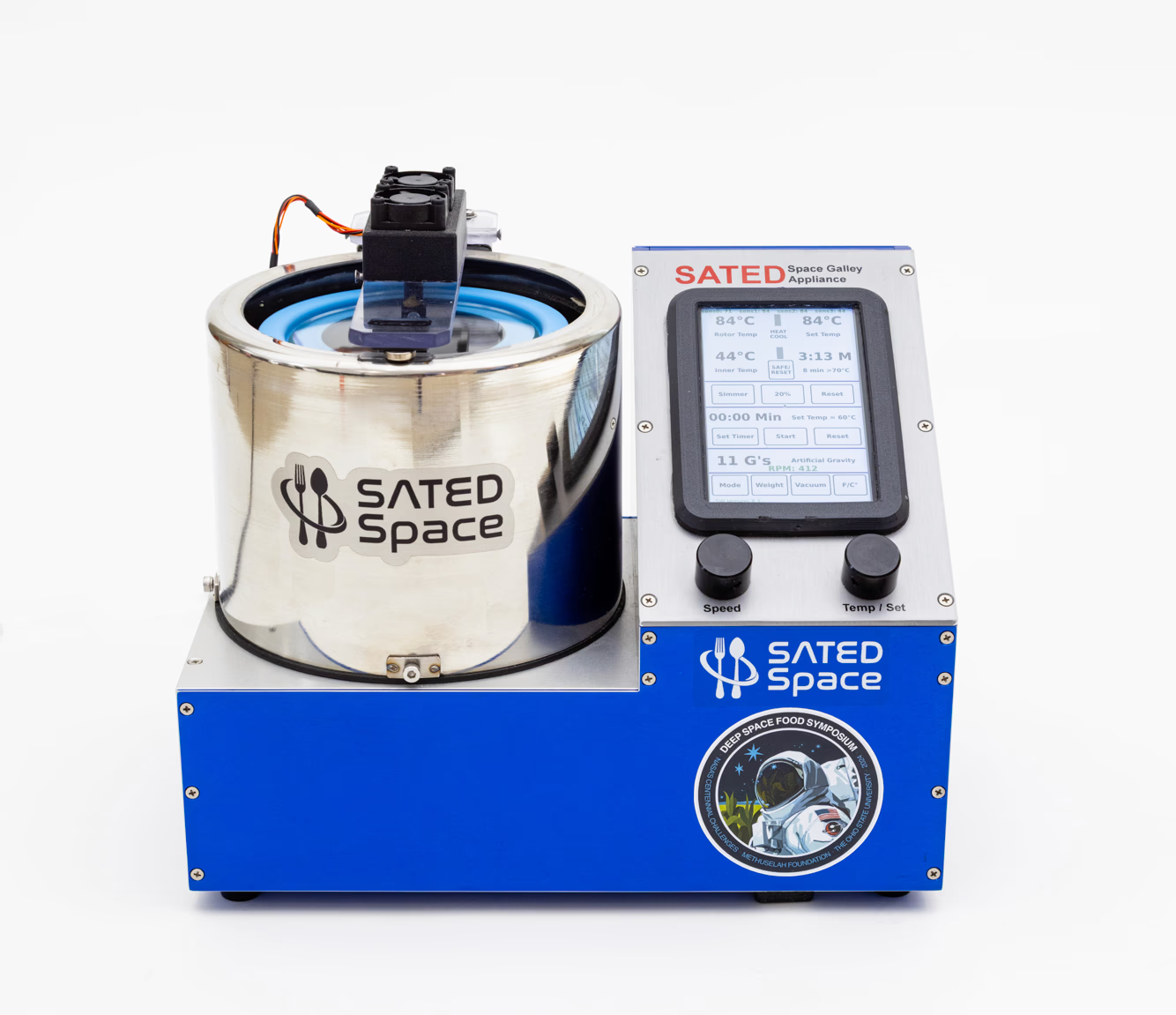
SATED allows astronauts to cook real food even in zero gravity. It simulates gravity by rotating a cylinder inside the device. The rotation creates centrifugal force that presses the ingredients against the heated walls, ensuring even cooking. There is no flame or smoke, only precise temperature and rotation control.
The oven can boil, fry, bake, or stew. It reproduces the cooking processes that gravity normally handles on Earth, while using minimal energy and remaining completely safe.
Thanks to SATED, astronaut menus could become far more diverse, from a hot breakfast omelet to a lemon pie for dessert. And all of this can be prepared right on board.
When the Deadline Is Astronomical
«SATED was a truly unique case,» recalls Volodymyr Karpliuk, CTO of JetSoftPro. The biggest challenge was time. The team had only three months for development, including an intense six-week phase with no room for error. Everything had to be completed before NASA’s deadline.
JetSoftPro applied its PDLC (Product Development Lifecycle) approach. This means the team works not just as a contractor but as a co-creator responsible for the outcome. Sometimes this requires going beyond the initial technical scope, as happened with SATED Space.
A physical device was needed for testing in Ukraine. Shipping it created new problems. The prototype arrived damaged: wires were torn off, components were broken, and spare parts were limited. The possibility of missing the deadline became very real. One of JetSoftPro’s engineers, Vitalii, with hardware experience, repaired the device himself, effectively saving the project. This allowed the team to continue development and submit the device for the competition.

«We often say that we can build not just a house but an entire city with roads, traffic lights, and infrastructure. The SATED device became a miniature version of that idea. Everything inside had to work in perfect sync,» says Karpliuk.
The Future Belongs to Integrated Solutions
The work on SATED highlighted JetSoftPro’s philosophy: the future of IT lies in integrated solutions where software, hardware, and infrastructure operate as a single system.
«The era of pure software is ending. Today, real value comes from how well everything is connected: hardware–software–infrastructure solutions that integrate into global knowledge bases and services,» says Serhiy Kharytonov, CEO of JetSoftPro.

This approach is already implemented in the company’s projects in Ukraine. One example is JetSuite, a system that automates most business processes such as finance, recruiting, HR and CRM that has a dedicated mobile app, giving employees quick access to everything they need. The app even replaces office keys.
SATED Among the Winners of the NASA Deep Space Food Challenge
In 2024, the Ascent Technology team, led by Jim Sears, made it to the final round and presented their device at the last stage of the NASA competition. The result: second place and $250,000 in funding for further development.
«This story proves that Ukrainian engineers can create products at a space-level standard,» says Kharytonov. And indeed, in just three months, the Ukrainian team helped bring to life a solution that could reshape the future of nutrition not only in space but also on Earth.
Today, SATED is still evolving. The device is being tested in new environments, featured on major TV channels, and advised by José Andrés, a well-known chef and founder of World Central Kitchen. «He was pleasantly surprised to learn that a Ukrainian team was behind the development,» Kharytonov adds.

What’s Next
NASA has not yet announced the next phase of the competition, but SATED Space is already preparing an updated version of the device. JetSoftPro is also preparing for new challenges.
«We are not stopping. This project showed that we are ready for the highest levels of technological complexity, from drones to space,» Kharytonov concludes.
From Earth to Orbit: The Ukrainian Tech Behind NASA’s New Space Cooking Innovation
Can you imagine cooking pizza in space? Or making an omelet or a lemon pie? What sounded like science fiction not long ago has become reality. And the team of Ukrainian developers at JetSoftPro helped make it possible, working closely with Jim Sears, founder of Ascent Technology and the original visionary behind SATED Space’s device.
But first, a bit of background. In 2021, NASA and the Canadian Space Agency (CSA) announced the Deep Space Food Challenge. The goal was to find innovative technologies that would allow cooking in space without gravity, fresh ingredients, or regular kitchen conditions. This was not only about crew comfort but also about maintaining physical and psychological health during long missions.
Three years later, the judges selected its finalists. One of them was SATED Space, a kitchen appliance designed for astronauts. The story of this device is also the story of the Ukrainian company JetSoftPro and the collaboration between its engineering team and Jim Sears, whose concept and hardware leadership shaped the direction of the project.
An American Client and a Ukrainian Team
JetSoftPro is a Ukrainian IT company with a 20-year history. Its team of more than 200 specialists works with clients across the United States, Europe, and Asia. The company focuses on automation, artificial intelligence, and, more recently, space tech.
In 2024, Jim Sears and his company, SATED Space from Boulder, Colorado, approached JetSoftPro. Jim, an engineer with deep hardware expertise and experience in advanced R&D, was looking for partners who could develop the software for his SATED prototype. The idea was to create a compact device capable of cooking food in microgravity using minimal resources.
The project was named SATED (Safe Appliance, Tidy, Efficient & Delicious). The Ukrainian team was responsible for developing the embedded software that would control the device and the graphical user interface.
How a SATED Space Device Works
SATED allows astronauts to cook real food even in zero gravity. It simulates gravity by rotating a cylinder inside the device. The rotation creates centrifugal force that presses the ingredients against the heated walls, ensuring even cooking. There is no flame or smoke, only precise temperature and rotation control.
The oven can boil, fry, bake, or stew. It reproduces the cooking processes that gravity normally handles on Earth, while using minimal energy and remaining completely safe.
Thanks to SATED, astronaut menus could become far more diverse, from a hot breakfast omelet to a lemon pie for dessert. And all of this can be prepared right on board.
When the Deadline Is Astronomical
«SATED was a truly unique case,» recalls Volodymyr Karpliuk, CTO of JetSoftPro. The biggest challenge was time. The team had only three months for development, including an intense six-week phase with no room for error. Everything had to be completed before NASA’s deadline.
JetSoftPro applied its PDLC (Product Development Lifecycle) approach. This means the team works not just as a contractor but as a co-creator responsible for the outcome. Sometimes this requires going beyond the initial technical scope, as happened with SATED Space.
A physical device was needed for testing in Ukraine. Shipping it created new problems. The prototype arrived damaged: wires were torn off, components were broken, and spare parts were limited. The possibility of missing the deadline became very real. One of JetSoftPro’s engineers, Vitalii, with hardware experience, repaired the device himself, effectively saving the project. This allowed the team to continue development and submit the device for the competition.
«We often say that we can build not just a house but an entire city with roads, traffic lights, and infrastructure. The SATED device became a miniature version of that idea. Everything inside had to work in perfect sync,» says Karpliuk.
The Future Belongs to Integrated Solutions
The work on SATED highlighted JetSoftPro’s philosophy: the future of IT lies in integrated solutions where software, hardware, and infrastructure operate as a single system.
«The era of pure software is ending. Today, real value comes from how well everything is connected: hardware–software–infrastructure solutions that integrate into global knowledge bases and services,» says Serhiy Kharytonov, CEO of JetSoftPro.
This approach is already implemented in the company’s projects in Ukraine. One example is JetSuite, a system that automates most business processes such as finance, recruiting, HR and CRM that has a dedicated mobile app, giving employees quick access to everything they need. The app even replaces office keys.
SATED Among the Winners of the NASA Deep Space Food Challenge
In 2024, the Ascent Technology team, led by Jim Sears, made it to the final round and presented their device at the last stage of the NASA competition. The result: second place and $250,000 in funding for further development.
«This story proves that Ukrainian engineers can create products at a space-level standard,» says Kharytonov. And indeed, in just three months, the Ukrainian team helped bring to life a solution that could reshape the future of nutrition not only in space but also on Earth.
Today, SATED is still evolving. The device is being tested in new environments, featured on major TV channels, and advised by José Andrés, a well-known chef and founder of World Central Kitchen. «He was pleasantly surprised to learn that a Ukrainian team was behind the development,» Kharytonov adds.
What’s Next
NASA has not yet announced the next phase of the competition, but SATED Space is already preparing an updated version of the device. JetSoftPro is also preparing for new challenges.
«We are not stopping. This project showed that we are ready for the highest levels of technological complexity, from drones to space,» Kharytonov concludes.