“Simple Things That Work Every Day Matter Most” — Jooble Co-Founder Roman Prokofiev

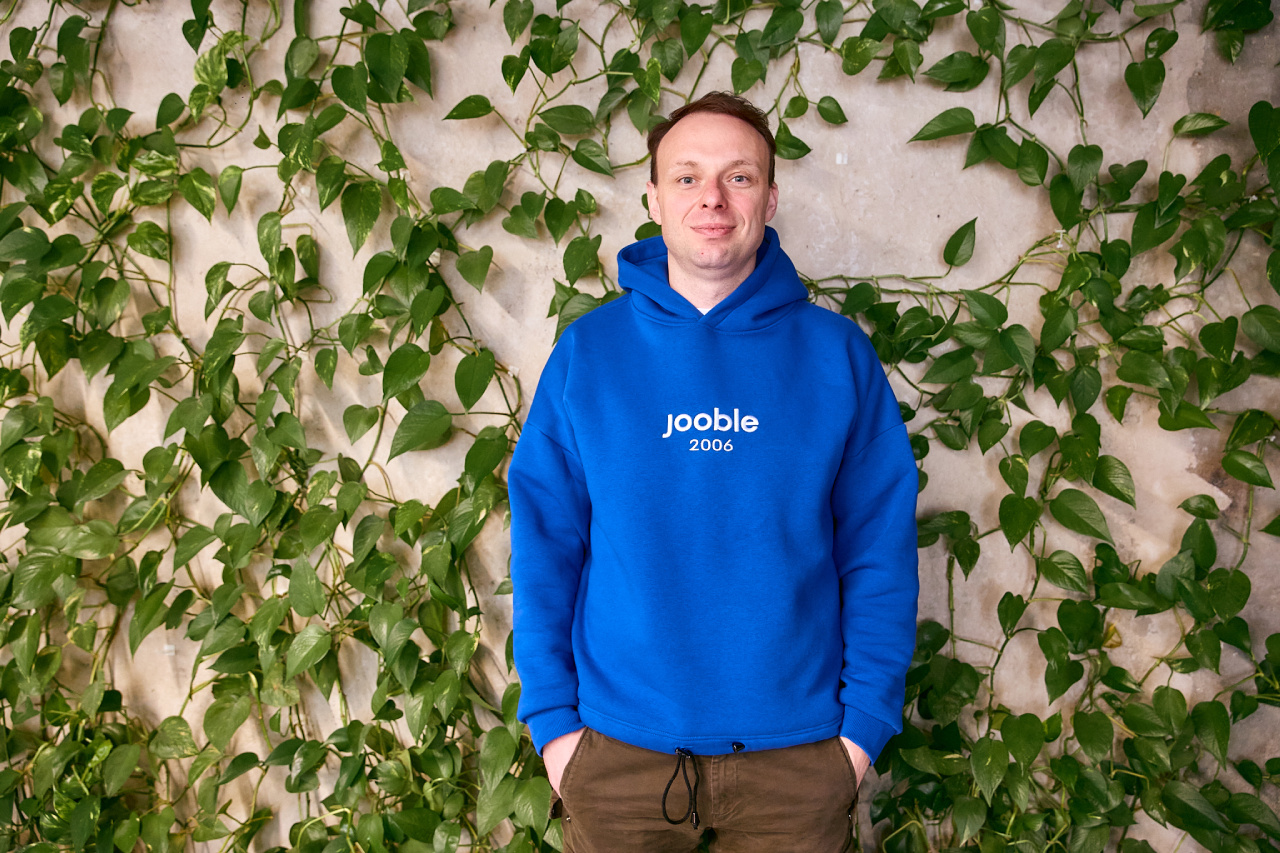
Roman Prokofiev is the co-founder of Jooble, one of the world’s largest job aggregators, and an active angel investor in Ukrainian projects. He shared his experience during the fireside chat «Leadership Practices 2026: How Are We Holding Up?» at the 2025 closing event of the Diia.City United — Technology Business Association, where Scroll.media served as an information partner. Below are the key takeaways from Prokofiev’s talk.
Your energy is part of the job
Prokofiev opens with an unpopular but straightforward idea: a founder’s mental and emotional state is as much a responsibility as P&L or strategy.
Entrepreneurs of his generation, he says, are used to «working themselves to death» and, for years, didn’t treat their own resources as requiring systematic attention. The result is predictable — declining productivity and worse decisions.
Every founder, Prokofiev argues, has to honestly track what drains their energy and what restores it, and structure their day so the balance tips toward the latter.
«Managing your energy is part of the job. Pay attention to what fuels you and what saps your energy… If you’re burned out and have no idea how to fix it, productivity will vanish,» he says.
Separately, Prokofiev emphasizes that in his personal setup, the main source of energy is the direction of his efforts.
«For me, the biggest energy comes from doing things that genuinely interest me. I don’t even try to analyze why I’m doing them. I don’t care whether there will be a result or not. I just do what interests me.»
Interest, in this sense, becomes a very pragmatic asset — a stable source of fuel without which no founder can sustain a strategy for long.
Education and environment
Prokofiev is a strong advocate of «big-picture» learning — programs that shift how you think, not just what skills you have.
As an example, he mentions the Wellbeing program on Coursera, a lecture series on the science of happiness and well-being. His cohort included participants from dozens of countries, from Chile to the Philippines. In practice, that meant hearing firsthand from people building companies at radically different scales — and that kind of environment changes you.
«When you sit next to someone who grew a team from a few dozen people to 13,000 in two years and opens one office every day, your perspective shifts. You come back home and can’t look at your own processes the same way.»
He calls these formats «long-term investments.» They don’t deliver immediate, tactical skills, but they reset what you consider realistic goals and which processes you’re even willing to launch.
From this perspective, choosing your environment — education programs, communities, boards, partners — becomes a separate and deliberate management track for a founder.
How to make decisions
When it comes to making decisions with partners, like on a board of directors, Prokofiev lays out the classic options — consensus, majority vote, or unilateral decisions — and admits that full consensus in a venture setup often produces weak decisions: ones that satisfy everyone but have no energy behind them.
Instead, he proposes a pyramid of approaches:
- Core business (80–90% of results): consensus matters here — «every violin is important,» and the cost of a mistake is high.
- New products built on the core: a sufficient majority is enough — someone will almost always be unhappy because their role is changing.
- Fundamentally new bets and experiments: one committed believer is enough.
«If you’re doing something fundamentally new, one person who truly believes in it and is ready to carry it forward is enough. Everyone else may not believe in it. And if you can’t trust the decision of just one person, then you simply don’t have the right people in the room,» Prokofiev explains.
To launch a new startup, he adds, you don’t need unanimous support — you need one strong owner and a dedicated budget. This approach avoids draining energy through forced consensus where a breakthrough is required, while protecting the core business that keeps the company running today.
Leadership as environment design, not coercion
Prokofiev draws a clear line between manufacturing and creative businesses. In the former, rules and regulations work. In the latter, they don’t.
«Coercion doesn’t work in creative professions. You can’t force someone to come up with an idea or take responsibility.»
His leadership model is built around creating the right environment rather than pushing people.
«A leader’s role is to build an environment where people can flourish. You can’t make a rose grow, but you can provide the right soil, water, and protection. Teams are the same — you manage the conditions, you don’t break people.»
Being humane doesn’t mean dodging hard choices. Prokofiev remembers the company’s first layoffs in 2023: the team saw the P&L, the financial situation was explained, and the cuts were described as necessary «to preserve those who remain.» For him, it was a mature conversation — not a way to shield people from reality.
«In our business, we have no assets except our people. So a founder’s key responsibility is simply to choose the right people. After that, they build the strategy themselves — you don’t need to micromanage them.»
Routine that keeps you sharp
When asked about «specific practices,» Prokofiev comes back to basics.
He’s not a fan of endless personal-productivity hacks, but he sticks to a few simple routines that have worked for him for years:
- a consistent sleep schedule — going to bed and waking up at the same time every day;
- healthy eating, without extreme restrictions or indulgences;
- morning cardio — about 45 minutes, which reliably kickstarts his energy for the day.
«I just do it. It’s easy for me to commit to. All the new trendy productivity stuff? No. What matters to me are the simple things that work every single day,» he says.
The message for founders is clear: build your own core set of non-negotiable practices that keep you functioning at your best, and stick to them no matter what the market or agenda throws at you.
“Simple Things That Work Every Day Matter Most” — Jooble Co-Founder Roman Prokofiev
Roman Prokofiev is the co-founder of Jooble, one of the world’s largest job aggregators, and an active angel investor in Ukrainian projects. He shared his experience during the fireside chat «Leadership Practices 2026: How Are We Holding Up?» at the 2025 closing event of the Diia.City United — Technology Business Association, where Scroll.media served as an information partner. Below are the key takeaways from Prokofiev’s talk.
Your energy is part of the job
Prokofiev opens with an unpopular but straightforward idea: a founder’s mental and emotional state is as much a responsibility as P&L or strategy.
Entrepreneurs of his generation, he says, are used to «working themselves to death» and, for years, didn’t treat their own resources as requiring systematic attention. The result is predictable — declining productivity and worse decisions.
Every founder, Prokofiev argues, has to honestly track what drains their energy and what restores it, and structure their day so the balance tips toward the latter.
«Managing your energy is part of the job. Pay attention to what fuels you and what saps your energy… If you’re burned out and have no idea how to fix it, productivity will vanish,» he says.
Separately, Prokofiev emphasizes that in his personal setup, the main source of energy is the direction of his efforts.
«For me, the biggest energy comes from doing things that genuinely interest me. I don’t even try to analyze why I’m doing them. I don’t care whether there will be a result or not. I just do what interests me.»
Interest, in this sense, becomes a very pragmatic asset — a stable source of fuel without which no founder can sustain a strategy for long.
Education and environment
Prokofiev is a strong advocate of «big-picture» learning — programs that shift how you think, not just what skills you have.
As an example, he mentions the Wellbeing program on Coursera, a lecture series on the science of happiness and well-being. His cohort included participants from dozens of countries, from Chile to the Philippines. In practice, that meant hearing firsthand from people building companies at radically different scales — and that kind of environment changes you.
«When you sit next to someone who grew a team from a few dozen people to 13,000 in two years and opens one office every day, your perspective shifts. You come back home and can’t look at your own processes the same way.»
He calls these formats «long-term investments.» They don’t deliver immediate, tactical skills, but they reset what you consider realistic goals and which processes you’re even willing to launch.
From this perspective, choosing your environment — education programs, communities, boards, partners — becomes a separate and deliberate management track for a founder.
How to make decisions
When it comes to making decisions with partners, like on a board of directors, Prokofiev lays out the classic options — consensus, majority vote, or unilateral decisions — and admits that full consensus in a venture setup often produces weak decisions: ones that satisfy everyone but have no energy behind them.
Instead, he proposes a pyramid of approaches:
- Core business (80–90% of results): consensus matters here — «every violin is important,» and the cost of a mistake is high.
- New products built on the core: a sufficient majority is enough — someone will almost always be unhappy because their role is changing.
- Fundamentally new bets and experiments: one committed believer is enough.
«If you’re doing something fundamentally new, one person who truly believes in it and is ready to carry it forward is enough. Everyone else may not believe in it. And if you can’t trust the decision of just one person, then you simply don’t have the right people in the room,» Prokofiev explains.
To launch a new startup, he adds, you don’t need unanimous support — you need one strong owner and a dedicated budget. This approach avoids draining energy through forced consensus where a breakthrough is required, while protecting the core business that keeps the company running today.
Leadership as environment design, not coercion
Prokofiev draws a clear line between manufacturing and creative businesses. In the former, rules and regulations work. In the latter, they don’t.
«Coercion doesn’t work in creative professions. You can’t force someone to come up with an idea or take responsibility.»
His leadership model is built around creating the right environment rather than pushing people.
«A leader’s role is to build an environment where people can flourish. You can’t make a rose grow, but you can provide the right soil, water, and protection. Teams are the same — you manage the conditions, you don’t break people.»
Being humane doesn’t mean dodging hard choices. Prokofiev remembers the company’s first layoffs in 2023: the team saw the P&L, the financial situation was explained, and the cuts were described as necessary «to preserve those who remain.» For him, it was a mature conversation — not a way to shield people from reality.
«In our business, we have no assets except our people. So a founder’s key responsibility is simply to choose the right people. After that, they build the strategy themselves — you don’t need to micromanage them.»
Routine that keeps you sharp
When asked about «specific practices,» Prokofiev comes back to basics.
He’s not a fan of endless personal-productivity hacks, but he sticks to a few simple routines that have worked for him for years:
- a consistent sleep schedule — going to bed and waking up at the same time every day;
- healthy eating, without extreme restrictions or indulgences;
- morning cardio — about 45 minutes, which reliably kickstarts his energy for the day.
«I just do it. It’s easy for me to commit to. All the new trendy productivity stuff? No. What matters to me are the simple things that work every single day,» he says.
The message for founders is clear: build your own core set of non-negotiable practices that keep you functioning at your best, and stick to them no matter what the market or agenda throws at you.