Reducing Dependence on China: How Aeromotors Builds Motors for UAVs In-House in Ukraine

In December, Ukrainian startup Aeromotors announced it had raised $550,000 from Sweden’s Front Ventures at a $10 million valuation. The company manufactures electric motors for UAVs entirely in-house and has set an ambitious goal: replacing Chinese components — a task defense manufacturers still struggle with.
Scroll.media spoke with Aeromotors co-founder and COO Yevheniia Kliuieva about how the startup began, what it’s building, and where it’s headed next.
When and under what circumstances was Aeromotors founded?
The idea for Aeromotors emerged in 2023. It was initiated by my partner, Andrii, who wanted to build one of the most complex and critical components in a drone — the motor.
At the time, every process — from winding copper to gluing magnets — was done by hand in a small workshop. Andrii assembled and tested the motors himself, without proper equipment and under harsh conditions. It was physically exhausting work.
A bit later, I joined as a co-founder, and we began seeking funding to purchase equipment and transition to full-scale production.
In August 2024, we officially registered Aeromotors and joined the MITS acceleration program. That’s when scaling truly began.
After the start of Russia’s full-scale invasion, we made a deliberate decision to shift our focus toward what we see as critically important: producing key components in Ukraine and reducing dependence on China.
Tell us about your first investments. How many investors do you have today?
Our first investment came from MITS Capital, an investment firm specializing in defense technologies. We also joined their acceleration program, organized in partnership with American University Kyiv. It’s a Y Combinator–style program that provides Ukrainian defense tech startups with tools for development and scaling.
Our partnership with MITS became much more than an investment — it was a school of strategic thinking. We gained valuable insights into entering European and US markets, negotiating, shaping the company’s positioning, building internal processes, and much more.
More recently, Front Ventures joined us, supporting the next stage of our growth. We’re grateful to both investment firms for their trust, support, and belief in our team and product.
What was your startup capital? Founders’ funds, FFF, or angels?
Initially, we had no equipment, which directly impacted the quality and consistency of our products. Much of the work was done by hand, with ongoing experimentation in materials and suppliers.
Step by step, we built out our production base — identifying what was absolutely critical and then seeking funding to acquire it. Up to that point, we covered all costs with our own funds. One of the first external sources of support was the BRAVE1 platform, where we publicly presented the Aeromotors idea for the first time. At that pitch, we met Artem Moroz, who supported the project from the very beginning and continues to do so today.
That moment became an important catalyst for further development and our first partnerships.
Tell us about your products. What makes them special, and where are they already being used?
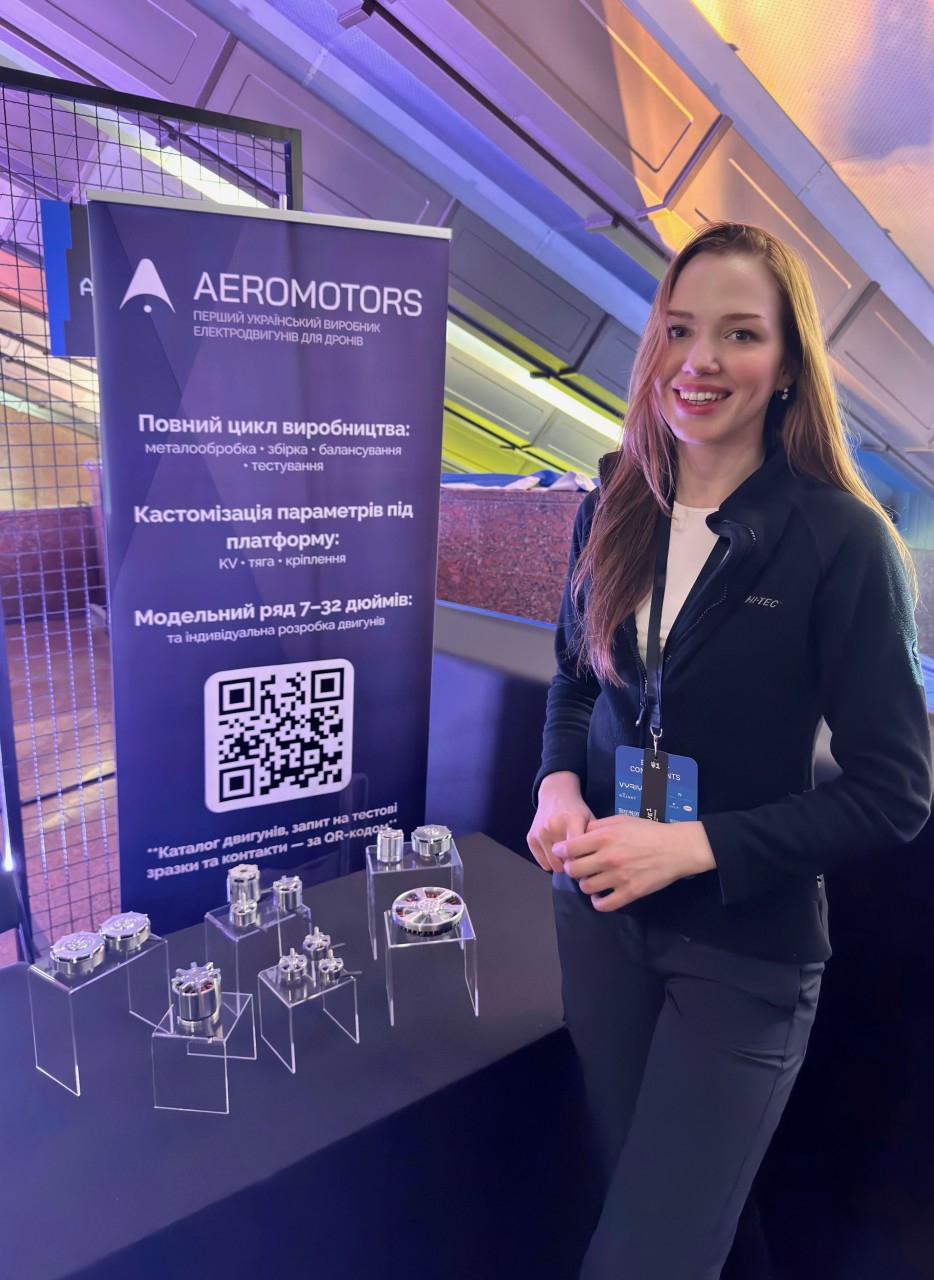
We manufacture motors for drones — from FPV platforms to heavier systems. Today, we have the broadest model lineup in Ukraine, ranging from 7 to 32 inches, and we continue to expand it. We began with just a few core models, which we thoroughly tested and refined.
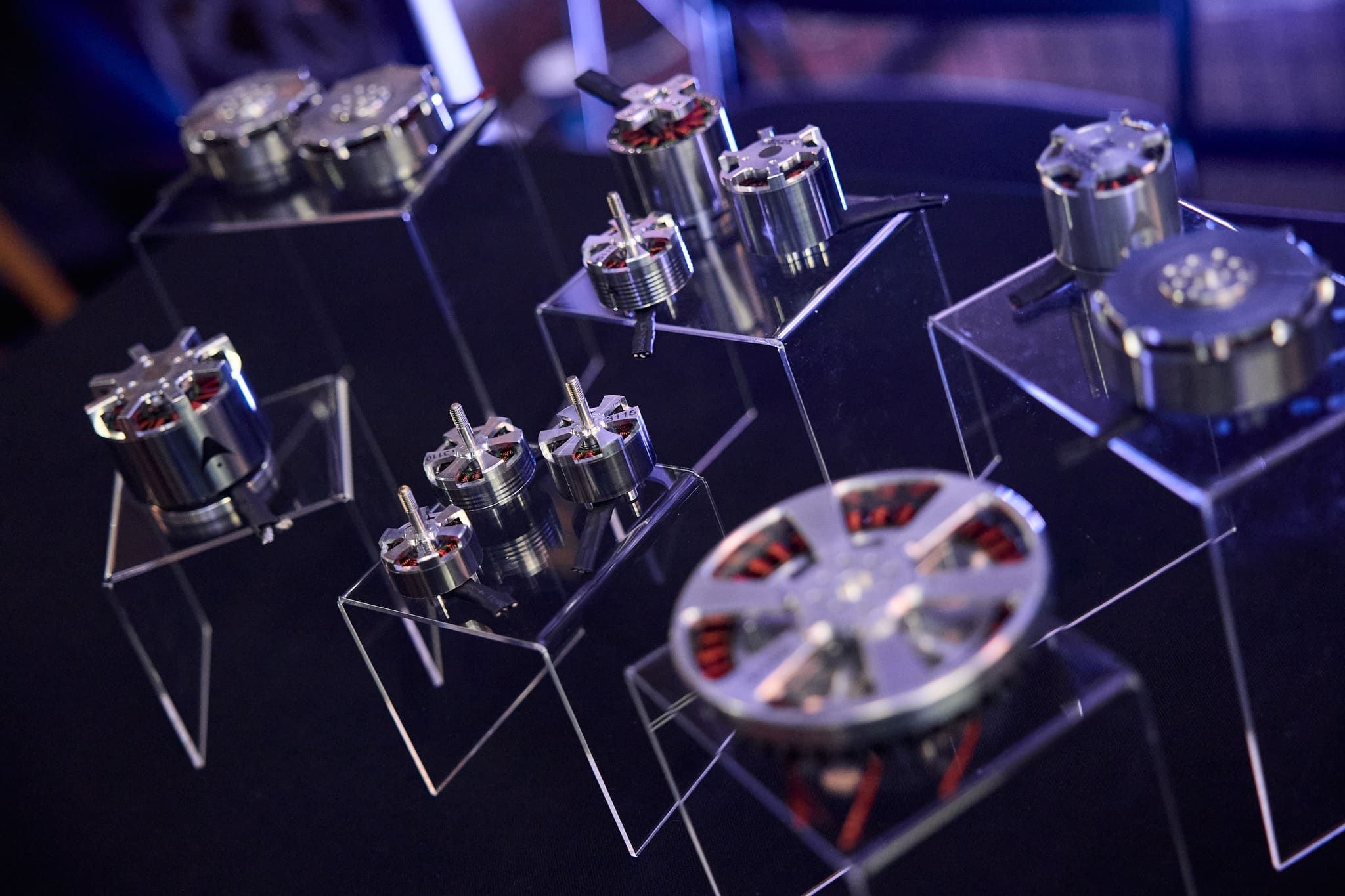
From day one, our focus has been on customization — because that’s what the market demands. Chinese manufacturers are optimized for mass production. We adapt parameters such as KV, thrust, and mounts to specific platforms and mission requirements. We can also develop a motor entirely from scratch based on a customer’s specifications.
Our second fundamental focus is full in-house production in Ukraine — from our own metalworking to assembly and testing. We deliberately avoid outsourcing in order to maintain full control over quality, production speed, and flexibility.
When it comes to imports, our key challenge is eliminating dependence on China for magnets. We’ve developed strategic solutions and now work with companies in other countries that have their own mineral deposits and can meet this demand. Everything else is sourced domestically.
What stage is Aeromotors at now? What are your production volumes, team size, and demand like?
Today, Aeromotors operates as a fully developed production facility with established processes, encompassing R&D, metalworking, assembly, testing, and quality control. All key stages are handled in-house in Ukraine, giving us flexibility, stability, and full control at every level.
Our current production capacity is around 10,000 motors per month. Following the recent investment from Front Ventures, we now have the opportunity to scale up to 60,000 motors per month.
Demand is growing alongside the market. We’re seeing strong interest not only in the FPV segment but also in larger, more powerful motors for heavier platforms. That’s why we’ve expanded our model range and continue to increase both assortment and monthly output in line with drone manufacturers’ needs.
What are your plans for the future, and what do you need to achieve them?
With funding from Front Ventures, we’re scaling production capacity to 60,000 motors per month. We plan to continue growing steadily, increasing volumes in response to customer demand.
At the same time, we’re exploring opportunities for a strategic presence in Europe, including localized production lines, partner facilities, or joint ventures. European companies are already approaching us with various cooperation proposals, and we’re currently engaged in a series of substantive negotiations.
That said, our primary focus remains Ukraine. We believe Ukrainian technologies have the potential to compete not only domestically but globally — and we’re committed to proving that through continued development and execution.
Reducing Dependence on China: How Aeromotors Builds Motors for UAVs In-House in Ukraine
In December, Ukrainian startup Aeromotors announced it had raised $550,000 from Sweden’s Front Ventures at a $10 million valuation. The company manufactures electric motors for UAVs entirely in-house and has set an ambitious goal: replacing Chinese components — a task defense manufacturers still struggle with.
Scroll.media spoke with Aeromotors co-founder and COO Yevheniia Kliuieva about how the startup began, what it’s building, and where it’s headed next.
When and under what circumstances was Aeromotors founded?
The idea for Aeromotors emerged in 2023. It was initiated by my partner, Andrii, who wanted to build one of the most complex and critical components in a drone — the motor.
At the time, every process — from winding copper to gluing magnets — was done by hand in a small workshop. Andrii assembled and tested the motors himself, without proper equipment and under harsh conditions. It was physically exhausting work.
A bit later, I joined as a co-founder, and we began seeking funding to purchase equipment and transition to full-scale production.
In August 2024, we officially registered Aeromotors and joined the MITS acceleration program. That’s when scaling truly began.
After the start of Russia’s full-scale invasion, we made a deliberate decision to shift our focus toward what we see as critically important: producing key components in Ukraine and reducing dependence on China.
Tell us about your first investments. How many investors do you have today?
Our first investment came from MITS Capital, an investment firm specializing in defense technologies. We also joined their acceleration program, organized in partnership with American University Kyiv. It’s a Y Combinator–style program that provides Ukrainian defense tech startups with tools for development and scaling.
Our partnership with MITS became much more than an investment — it was a school of strategic thinking. We gained valuable insights into entering European and US markets, negotiating, shaping the company’s positioning, building internal processes, and much more.
More recently, Front Ventures joined us, supporting the next stage of our growth. We’re grateful to both investment firms for their trust, support, and belief in our team and product.
What was your startup capital? Founders’ funds, FFF, or angels?
Initially, we had no equipment, which directly impacted the quality and consistency of our products. Much of the work was done by hand, with ongoing experimentation in materials and suppliers.
Step by step, we built out our production base — identifying what was absolutely critical and then seeking funding to acquire it. Up to that point, we covered all costs with our own funds. One of the first external sources of support was the BRAVE1 platform, where we publicly presented the Aeromotors idea for the first time. At that pitch, we met Artem Moroz, who supported the project from the very beginning and continues to do so today.
That moment became an important catalyst for further development and our first partnerships.
Tell us about your products. What makes them special, and where are they already being used?
We manufacture motors for drones — from FPV platforms to heavier systems. Today, we have the broadest model lineup in Ukraine, ranging from 7 to 32 inches, and we continue to expand it. We began with just a few core models, which we thoroughly tested and refined.
From day one, our focus has been on customization — because that’s what the market demands. Chinese manufacturers are optimized for mass production. We adapt parameters such as KV, thrust, and mounts to specific platforms and mission requirements. We can also develop a motor entirely from scratch based on a customer’s specifications.
Our second fundamental focus is full in-house production in Ukraine — from our own metalworking to assembly and testing. We deliberately avoid outsourcing in order to maintain full control over quality, production speed, and flexibility.
When it comes to imports, our key challenge is eliminating dependence on China for magnets. We’ve developed strategic solutions and now work with companies in other countries that have their own mineral deposits and can meet this demand. Everything else is sourced domestically.
What stage is Aeromotors at now? What are your production volumes, team size, and demand like?
Today, Aeromotors operates as a fully developed production facility with established processes, encompassing R&D, metalworking, assembly, testing, and quality control. All key stages are handled in-house in Ukraine, giving us flexibility, stability, and full control at every level.
Our current production capacity is around 10,000 motors per month. Following the recent investment from Front Ventures, we now have the opportunity to scale up to 60,000 motors per month.
Demand is growing alongside the market. We’re seeing strong interest not only in the FPV segment but also in larger, more powerful motors for heavier platforms. That’s why we’ve expanded our model range and continue to increase both assortment and monthly output in line with drone manufacturers’ needs.
What are your plans for the future, and what do you need to achieve them?
With funding from Front Ventures, we’re scaling production capacity to 60,000 motors per month. We plan to continue growing steadily, increasing volumes in response to customer demand.
At the same time, we’re exploring opportunities for a strategic presence in Europe, including localized production lines, partner facilities, or joint ventures. European companies are already approaching us with various cooperation proposals, and we’re currently engaged in a series of substantive negotiations.
That said, our primary focus remains Ukraine. We believe Ukrainian technologies have the potential to compete not only domestically but globally — and we’re committed to proving that through continued development and execution.