How Fintech-IT Group Works — A Mono Developer with a $1B+ Valuation

monobank is, without exaggeration, a one-of-a-kind project. In just eight years, Ukraine’s first mobile-first bank has attracted 10 million customers, built an entire ecosystem of products and services, and recently even «broke the Internet» with its lemon-themed marketing.
Until October 6, the mono developer company was known as Fintech Band, led by Oleg Gorokhovskyi and Mykhailo Rogalskiy. However, with the announcement of an investment from UMAEF, which provided the company with its first official valuation of over $1 billion, the company rebranded as the Ukrainian IT holding, Fintech-IT Group.
How did Fintech-IT Group come to be, what companies are part of it, how does the holding operate, and why hadn’t it been talked about before? Oleg Gorokhovskyi shared the details with Scroll.media.

When was Fintech-IT Group founded, and why was now the right time to create it?
The full-scale invasion forced us to put plans for improving our corporate structure on hold — operational stability was the priority. In 2024, we revisited this issue, agreed on the exit of two previous shareholders from Fintech Band and ACDC, received approval from the Antimonopoly Committee of Ukraine to control these two companies in April 2025, and completed the formalization of the structure under the Fintech-IT Group brand.
You didn’t communicate the merger of your companies into Fintech-IT Group in advance. Why? How has this transformation affected the business structure and the operations of individual companies?
When we were finalizing the merger, the agreement with the Ukraine-Moldova American Enterprise Fund (UMAEF) was already in the works. So we decided to announce everything at the same time.
The creation of a group is primarily a sign of business maturity. It doesn’t directly affect our product initiatives, but it strengthens corporate governance, consolidates resources, and improves management efficiency.
Combined with investments from UMAEF and a group of American private investors, the formation of the group has enhanced the companies’ resilience, increased trust from international partners, and laid a foundation for scaling and potentially entering foreign markets.
Before the UMAEF investment, everyone knew monobank’s developers under the Fintech Band brand. Now, the company is part of Fintech-IT Group. Which companies are included, how did they emerge, and what do they do today?
Fintech Band was the first company we established in 2017. We developed our first solution — the Monobank app for individuals at Universal Bank JSC. Subsequent companies emerged as a result of the development of new areas:
- ACDC Processing – Launched in 2020 as a technology operator for payment services. From 2021 to 2025, it was recognized by the National Bank of Ukraine as a significant payment infrastructure operator. ACDC holds Visa and Mastercard certifications, PCI DSS certification, and is the top independent technology operator of payment services in Ukraine.
- Shake to Pay – Created in 2021 to develop QR solutions and services for the HoReCa segment. That year, the company acquired Expirenza through M&A, and in 2023, brought in the TakeUsEat team (a table reservation service). Expirenza by mono is now the leader in HoReCa digitalization.
- Kilobyte – Established in 2022 to drive international expansion and develop monobank’s B2B and B2C solutions. Kilobyte developed the new monobank 2.0 app in 2023, integrating services for individuals and businesses.
- MOSST – A payment services operator acquired in 2024 from Swiss bank Compagnie Bancaire Helvétique (CBH). The group is investing heavily to modernize it.
- Other holdings – Includes market by mono, a marketplace connecting sellers and buyers, and Loyalty.ai, a platform enabling partners to run loyalty programs in banking apps.
What’s the ownership structure after UMAEF’s investment? Who are the main stakeholders?
The founders, Mykhailo Rogalskiy and I, remain equal majority owners. UMAEF and a group of American private investors became minority shareholders. We don’t disclose exact shares, but UMAEF is our first external institutional investor.
What is Fintech-IT Group today? How is it structured, and how are the businesses growing?
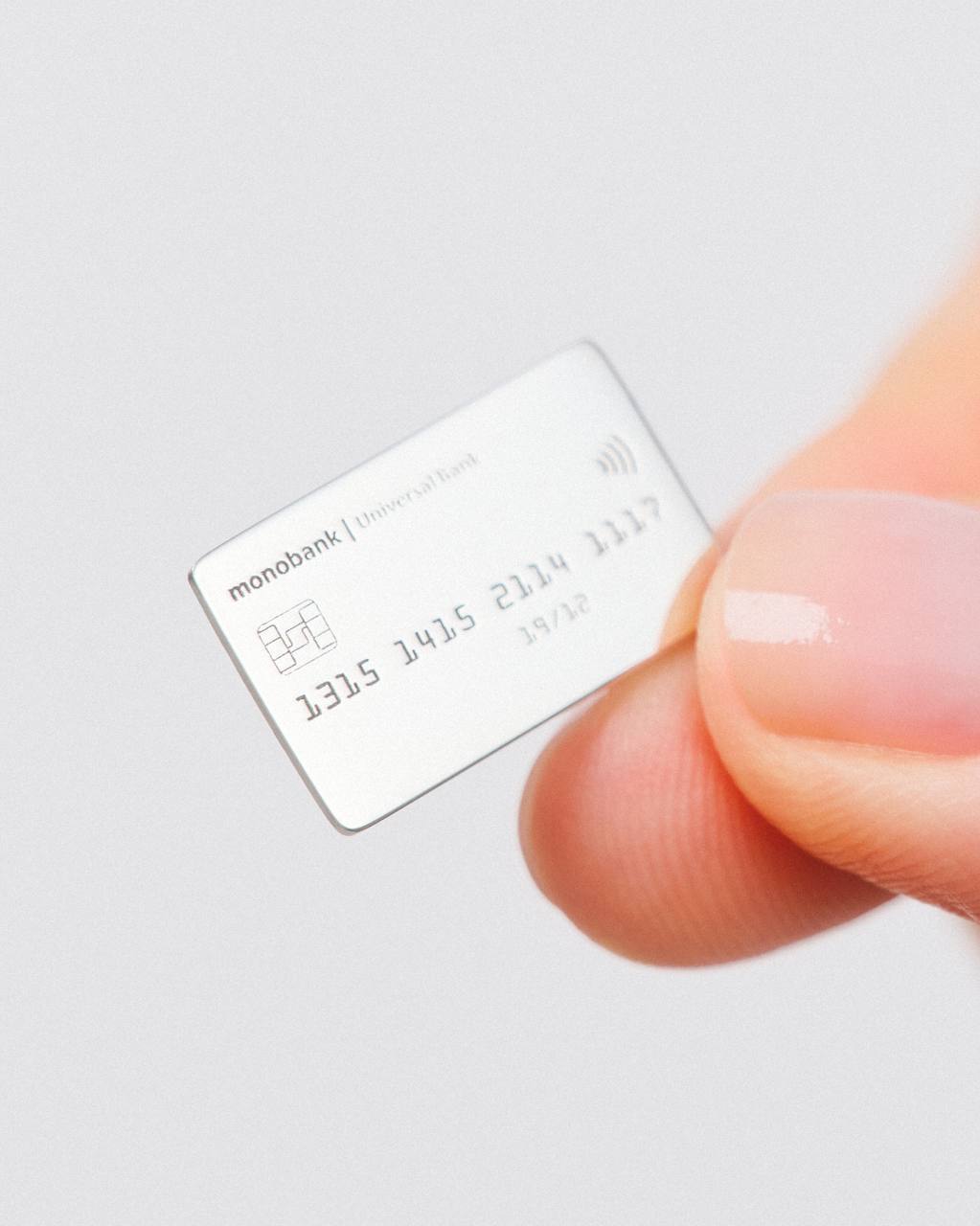
Today, Fintech-IT Group is the developer behind the mono ecosystem, operating in two main areas. First — software development for Universal Bank JSC. monobank has become Ukraine’s second-largest bank in terms of individual and entrepreneur payment cards, and consistently ranks among the top 35 neobanks globally, according to CNBC.
Second — development of proprietary tech products, including:
- market by mono — a marketplace connecting buyers and sellers
- Expirenza — digitizing restaurant payments, tips, and menus
- Base by mono — a monetization platform for online creators
- Loyalty.ai — enabling partners to run loyalty programs in banking apps
The group follows a «companies by direction» model: each major strategic segment has its own legal entity, team, and objectives. This structure allows for clear accountability and motivation, separate assessment of effectiveness, risks, and growth potential, and investment decisions made at the level of individual business units rather than the entire group.
At the same time, a unified corporate framework ensures shared standards for management, financial control, risk management, and compliance, as well as an environment for exchanging knowledge, technologies, and human capital.
This combination of entrepreneurial flexibility and centralized discipline reflects the best practices of private equity and venture capital.
How are the individual companies within Fintech-IT Group organized? Do they share teams, infrastructure, offices, and management?
Each company has its own development and product management teams, which work within their own domain and bear full responsibility for it.
At the same time, we share administrative resources, including HR, finance, and legal support, as well as actively exchange knowledge and technological solutions. This creates a unified, synergistic ecosystem.
How many people work at Fintech-IT Group, and are you planning to expand the team?
Today, our group employs around 630 specialists, including roughly 400 IT professionals. We have two offices — in Kyiv and Dnipro — while the rest of the team works remotely across Ukraine.
We’re growing dynamically, constantly launching and developing new products, so we are actively expanding the team. For new projects, we plan to hire at least 50 additional specialists.
Do you feel a shortage of qualified talent in Ukraine?
Currently, we can successfully close all vacancies, although the search process occasionally takes longer — especially when it involves rare expertise in modern technologies. At the same time, we recognize that talent shortages may intensify in the future.
That’s why we’re preparing in advance by investing in young talent. For example, this summer, we launched an AI internship for talented students, providing them with practical experience and a path to contribute to our projects in the future.

Earlier, you said your focus is currently on growth in Ukraine. Why?
Yes, we are indeed focused on growth in Ukraine — this is where our core audience is, and we see significant potential in e-commerce and fintech solutions for businesses. Our B2C direction is also continuing to grow actively.
Are you still planning to launch Stereo by mono, or has the project been taken off the agenda? How did regulatory challenges in Poland and Koto’s failure in the UK influence your plans? Are you still considering global expansion — and if so, with which products? Will the UMAEF partnership help?
The Stereo and Koto projects are currently on hold. We are considering potential expansion into international markets, but we’re not disclosing details for now.
The creation of the group and UMAEF’s investment open new opportunities for international development in the future.
Are you preparing any new products you can talk about?
We plan to announce a new development direction soon.
How Fintech-IT Group Works — A Mono Developer with a $1B+ Valuation
monobank is, without exaggeration, a one-of-a-kind project. In just eight years, Ukraine’s first mobile-first bank has attracted 10 million customers, built an entire ecosystem of products and services, and recently even «broke the Internet» with its lemon-themed marketing.
Until October 6, the mono developer company was known as Fintech Band, led by Oleg Gorokhovskyi and Mykhailo Rogalskiy. However, with the announcement of an investment from UMAEF, which provided the company with its first official valuation of over $1 billion, the company rebranded as the Ukrainian IT holding, Fintech-IT Group.
How did Fintech-IT Group come to be, what companies are part of it, how does the holding operate, and why hadn’t it been talked about before? Oleg Gorokhovskyi shared the details with Scroll.media.
When was Fintech-IT Group founded, and why was now the right time to create it?
The full-scale invasion forced us to put plans for improving our corporate structure on hold — operational stability was the priority. In 2024, we revisited this issue, agreed on the exit of two previous shareholders from Fintech Band and ACDC, received approval from the Antimonopoly Committee of Ukraine to control these two companies in April 2025, and completed the formalization of the structure under the Fintech-IT Group brand.
You didn’t communicate the merger of your companies into Fintech-IT Group in advance. Why? How has this transformation affected the business structure and the operations of individual companies?
When we were finalizing the merger, the agreement with the Ukraine-Moldova American Enterprise Fund (UMAEF) was already in the works. So we decided to announce everything at the same time.
The creation of a group is primarily a sign of business maturity. It doesn’t directly affect our product initiatives, but it strengthens corporate governance, consolidates resources, and improves management efficiency.
Combined with investments from UMAEF and a group of American private investors, the formation of the group has enhanced the companies’ resilience, increased trust from international partners, and laid a foundation for scaling and potentially entering foreign markets.
Before the UMAEF investment, everyone knew monobank’s developers under the Fintech Band brand. Now, the company is part of Fintech-IT Group. Which companies are included, how did they emerge, and what do they do today?
Fintech Band was the first company we established in 2017. We developed our first solution — the Monobank app for individuals at Universal Bank JSC. Subsequent companies emerged as a result of the development of new areas:
- ACDC Processing – Launched in 2020 as a technology operator for payment services. From 2021 to 2025, it was recognized by the National Bank of Ukraine as a significant payment infrastructure operator. ACDC holds Visa and Mastercard certifications, PCI DSS certification, and is the top independent technology operator of payment services in Ukraine.
- Shake to Pay – Created in 2021 to develop QR solutions and services for the HoReCa segment. That year, the company acquired Expirenza through M&A, and in 2023, brought in the TakeUsEat team (a table reservation service). Expirenza by mono is now the leader in HoReCa digitalization.
- Kilobyte – Established in 2022 to drive international expansion and develop monobank’s B2B and B2C solutions. Kilobyte developed the new monobank 2.0 app in 2023, integrating services for individuals and businesses.
- MOSST – A payment services operator acquired in 2024 from Swiss bank Compagnie Bancaire Helvétique (CBH). The group is investing heavily to modernize it.
- Other holdings – Includes market by mono, a marketplace connecting sellers and buyers, and Loyalty.ai, a platform enabling partners to run loyalty programs in banking apps.
What’s the ownership structure after UMAEF’s investment? Who are the main stakeholders?
The founders, Mykhailo Rogalskiy and I, remain equal majority owners. UMAEF and a group of American private investors became minority shareholders. We don’t disclose exact shares, but UMAEF is our first external institutional investor.
What is Fintech-IT Group today? How is it structured, and how are the businesses growing?
Today, Fintech-IT Group is the developer behind the mono ecosystem, operating in two main areas. First — software development for Universal Bank JSC. monobank has become Ukraine’s second-largest bank in terms of individual and entrepreneur payment cards, and consistently ranks among the top 35 neobanks globally, according to CNBC.
Second — development of proprietary tech products, including:
- market by mono — a marketplace connecting buyers and sellers
- Expirenza — digitizing restaurant payments, tips, and menus
- Base by mono — a monetization platform for online creators
- Loyalty.ai — enabling partners to run loyalty programs in banking apps
The group follows a «companies by direction» model: each major strategic segment has its own legal entity, team, and objectives. This structure allows for clear accountability and motivation, separate assessment of effectiveness, risks, and growth potential, and investment decisions made at the level of individual business units rather than the entire group.
At the same time, a unified corporate framework ensures shared standards for management, financial control, risk management, and compliance, as well as an environment for exchanging knowledge, technologies, and human capital.
This combination of entrepreneurial flexibility and centralized discipline reflects the best practices of private equity and venture capital.
How are the individual companies within Fintech-IT Group organized? Do they share teams, infrastructure, offices, and management?
Each company has its own development and product management teams, which work within their own domain and bear full responsibility for it.
At the same time, we share administrative resources, including HR, finance, and legal support, as well as actively exchange knowledge and technological solutions. This creates a unified, synergistic ecosystem.
How many people work at Fintech-IT Group, and are you planning to expand the team?
Today, our group employs around 630 specialists, including roughly 400 IT professionals. We have two offices — in Kyiv and Dnipro — while the rest of the team works remotely across Ukraine.
We’re growing dynamically, constantly launching and developing new products, so we are actively expanding the team. For new projects, we plan to hire at least 50 additional specialists.
Do you feel a shortage of qualified talent in Ukraine?
Currently, we can successfully close all vacancies, although the search process occasionally takes longer — especially when it involves rare expertise in modern technologies. At the same time, we recognize that talent shortages may intensify in the future.
That’s why we’re preparing in advance by investing in young talent. For example, this summer, we launched an AI internship for talented students, providing them with practical experience and a path to contribute to our projects in the future.
Earlier, you said your focus is currently on growth in Ukraine. Why?
Yes, we are indeed focused on growth in Ukraine — this is where our core audience is, and we see significant potential in e-commerce and fintech solutions for businesses. Our B2C direction is also continuing to grow actively.
Are you still planning to launch Stereo by mono, or has the project been taken off the agenda? How did regulatory challenges in Poland and Koto’s failure in the UK influence your plans? Are you still considering global expansion — and if so, with which products? Will the UMAEF partnership help?
The Stereo and Koto projects are currently on hold. We are considering potential expansion into international markets, but we’re not disclosing details for now.
The creation of the group and UMAEF’s investment open new opportunities for international development in the future.
Are you preparing any new products you can talk about?
We plan to announce a new development direction soon.