Not all drones are built smart. Many operate as isolated devices — flying, capturing footage, or performing simple tasks with no real-time communication or data processing. But as drone technology advances, the need for connected systems becomes essential, especially in… wait, all industries!
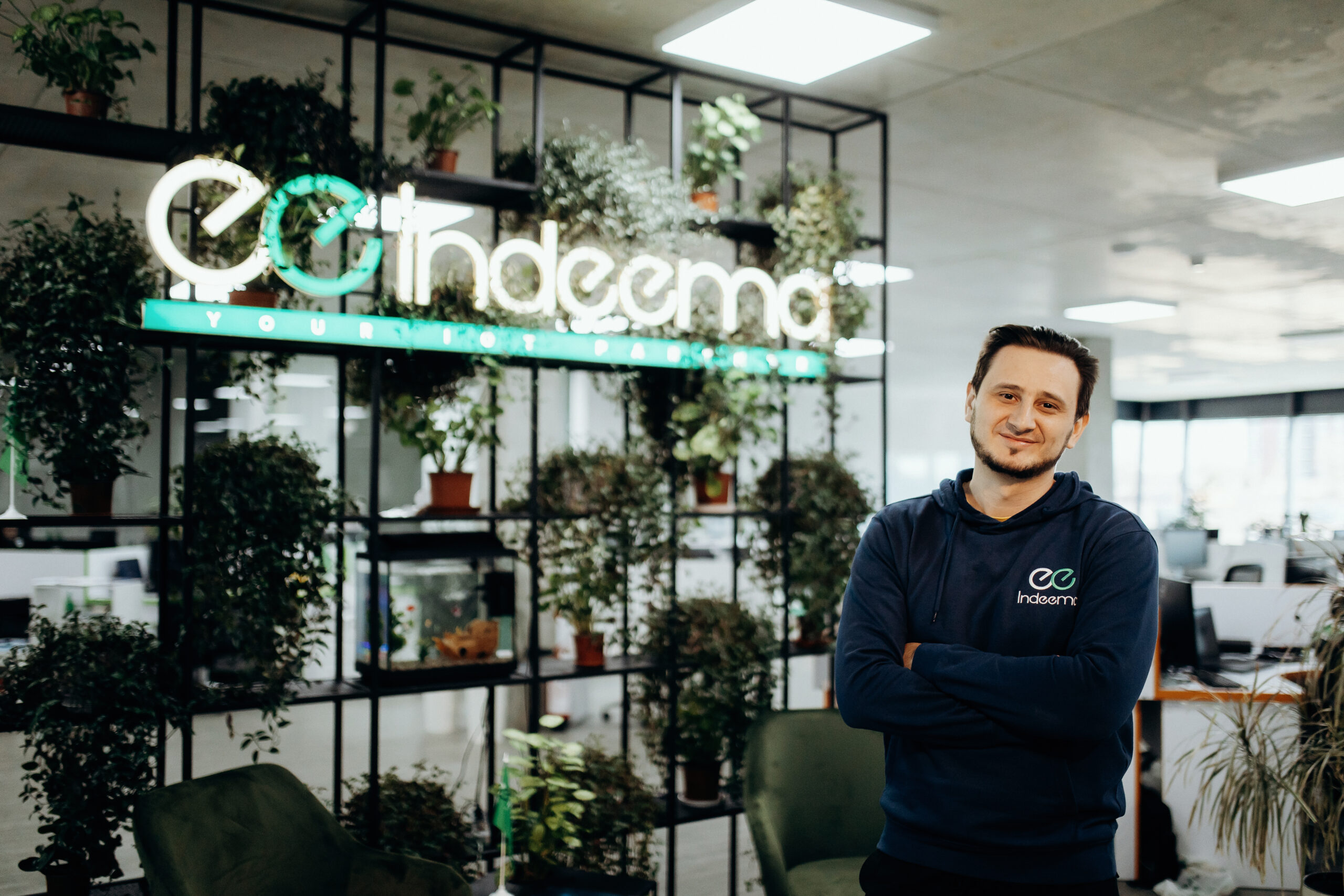
That makes it the perfect time to talk about the Internet of Things (IoT). When IoT meets drone development, UAVs become smarter — able to gather data, make quick decisions, and stay connected with the cloud or other devices around them. Indeema, with its strong background in IoT, brings this kind of connected thinking into the drone world, helping drones do more than just fly.

With solid experience in smart homes, renewable energy, and industrial automation, Indeema knows how to build systems where hardware, firmware, and software all work seamlessly together. That kind of foundation is key when creating UAVs that aren’t just flying devices, but smart, connected parts of a larger, scalable ecosystem.
Indeema’s Foundation: Building on IoT Expertise
Delivering truly connected products — whether for smart homes, energy systems, or industrial application — takes more than writing good code or building solid hardware. It demands a deep understanding of how devices, data, and cloud systems work together as part of a single, intelligent ecosystem.
Real-World Experience Across Sectors
- Indeema developed that expertise by working on IoT projects across different industries. One example comes from a European smart home provider, where the team helped develop a custom solution with advanced features, including water leak detection, smart lighting, door locks, fire alarms, and heating control. The solution integrated 7 core systems into one platform, reduced household energy consumption by up to 22%, and improved incident response time by 40%. All systems were remotely managed, giving the entire family 24/7 real-time insights and full control over their living environment.
- In the energy sector, Indeema created a solution for the Swiss market that made managing solar power far more efficient. The platform tracks energy production and usage, visualizes trends for better performance — all while helping installers support their customers more effectively. The system was designed to support more than 80 mobile applications and enables reliable energy management for over 60,000 end users.
What ties these projects together? Smart systems only work when hardware, firmware, and software are designed to operate in harmony. That kind of integration doesn’t happen in silos. It requires tightly aligned teams from day one — engineers who not only know their domain but also understand the bigger picture.
Whether it’s a smart home, an energy network, or an unmanned aerial vehicle, the principle remains the same: cross-functional expertise and a shared product vision are what turn great ideas into real-world solutions.
Growing Demand for Autonomous, Cloud-Connected UAV Systems Globally
In just a few years, the drone industry has gone from a niche interest to a thriving global sector with its own standards, associations, and growing demand. What started as a tool for hobbyists and the military has evolved into a dynamic ecosystem, with drones now playing a key role in agriculture, energy, infrastructure, defense, and more.
Today, nearly every country has its own drone association or regulatory body, supporting innovation while ensuring safety and compliance. From the Federal Aviation Administration (FAA) in the U.S. to the European Union Aviation Safety Agency (EASA) and national groups like UAV DACH in Germany or the British Drone Consortium in the UK, these organizations are helping to formalize how drones are developed, tested, and deployed.
And it’s not just about the drone itself anymore. The focus is shifting toward fully autonomous, cloud-connected systems — capable of streaming data in real time, integrating with enterprise platforms, and making intelligent decisions on the fly.
For example, in agriculture, drones now autonomously survey large crop areas, upload imagery to cloud dashboards, and trigger automated irrigation responses based on vegetation health. In energy, UAVs inspect power lines or wind turbines, upload reports to asset management platforms, and alert technicians of anomalies — all without manual intervention. In defense, autonomous drones can follow pre-set missions, relay encrypted video feeds in real time, and adapt to changes in the environment with AI-based logic.
Companies are no longer looking for flying cameras; they want flying systems — connected, and mission-ready.
TYKHO & Indeema: A Drone Tech Success Story
TYKHO Electronics is a company specializing in the development of advanced UAV systems for defense and special operations. One of their key goals was to build a fully European-made electronics stack, avoiding unreliable or grey-market components. They needed trusted, transparent technology built to meet the rigorous demands of modern UAV missions.
To make that vision a reality, TYKHO sought a partner with deep technical knowledge, full-stack development capabilities, and a strong track record in embedded systems. That’s where Indeema came in.
The collaboration covered several core areas of the drone platform.
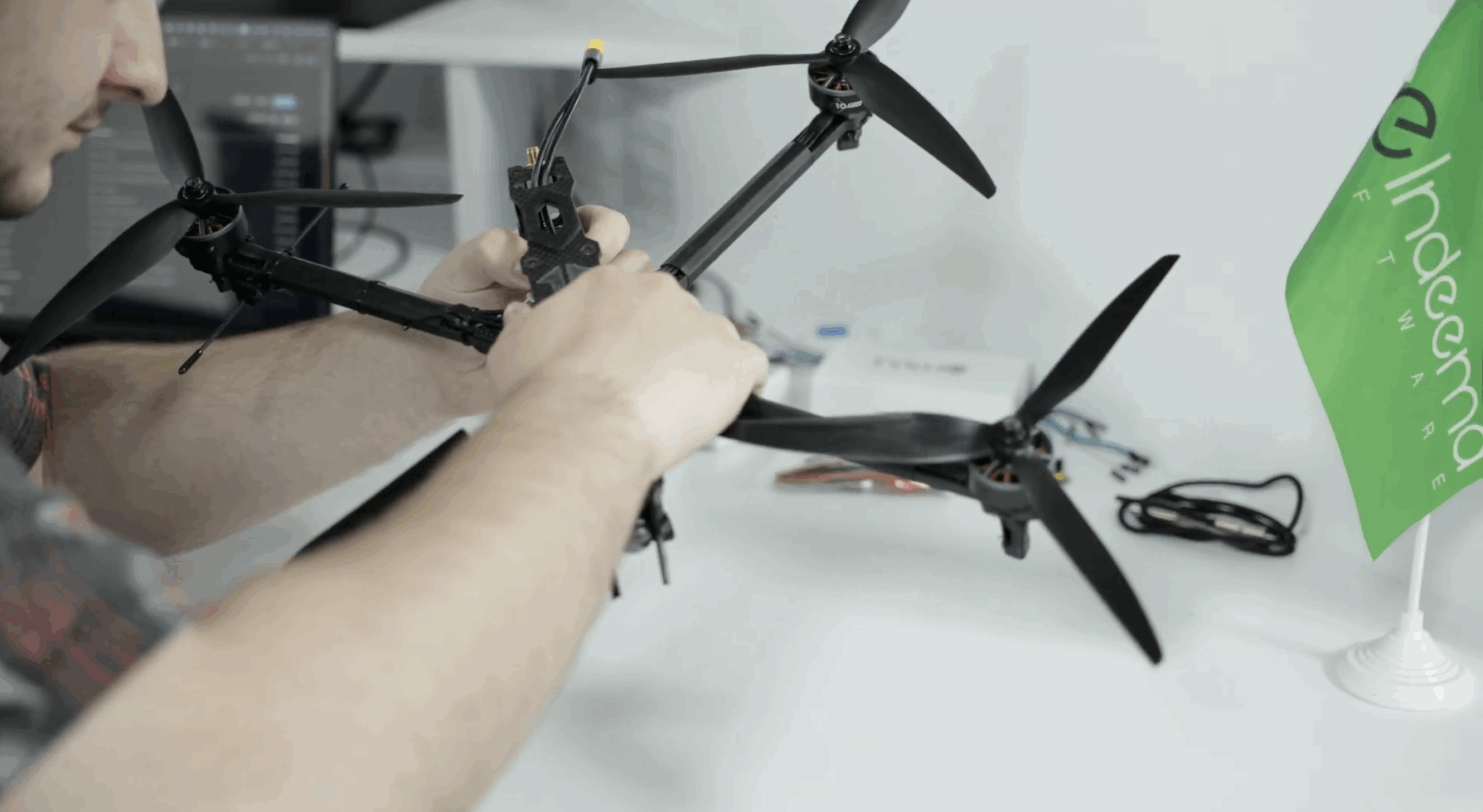
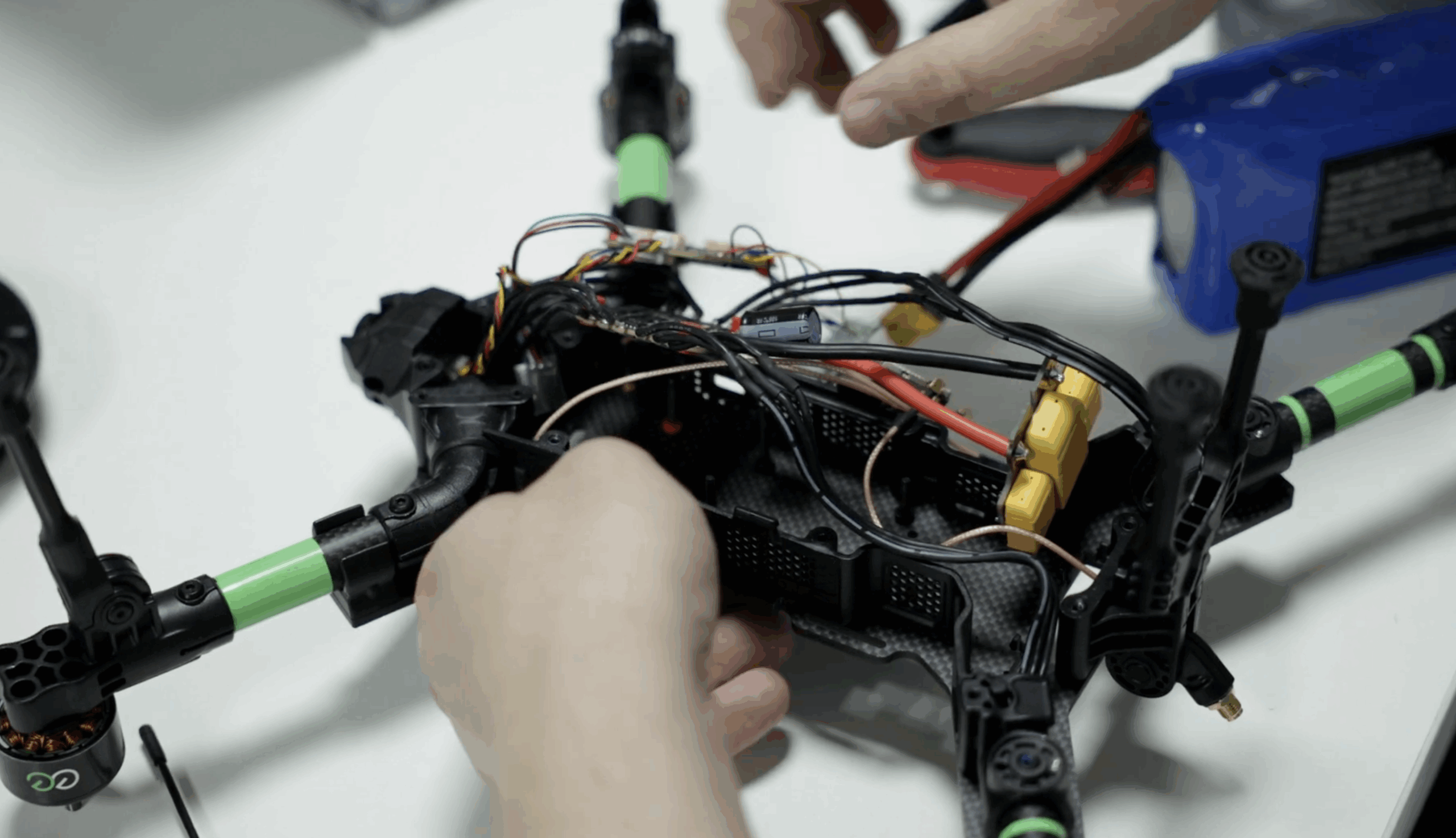
Together, the teams designed and developed flight controllers — the «brain» of the UAV — responsible for precise navigation, real-time decision-making, and smooth communication between onboard systems.
The project also extended to critical electronic components, including modules for TYKHO’s jamming systems, which safeguard drones against signal interference and electronic threats.
But beyond the technical scope, what truly powered the project was the integrated development approach. With hardware, firmware, and software experts working under one roof, both teams could stay aligned on the product vision, adapt quickly, and solve challenges as they emerged. This level of collaboration shortened timelines and improved the reliability of the final product.
Key outcomes of the collaboration include:
- More than 5,000 UAVs equipped with Tykho-powered flight stacks
- Deployment across 10+ military units actively engaged in combat operations
- Over 90,000 cumulative flight hours successfully logged in real-world mission conditions
TYKHO’s success is a strong example of what’s possible when drone systems are designed with transparency and a cross-functional engineering approach. It also proves that Europe can build its own cutting-edge UAV technology, utilizing European-made electronics and components.
How Indeema Became a Trusted Partner for Global Tech Leaders
In recent years, Ukrainian tech companies have gained deep, real-world experience building solutions that are not only smart and scalable but also proven in some of the toughest conditions imaginable. While this experience comes at a high cost for the country, it has shaped a generation of engineers and product teams who know how to deliver technology that works consistently, efficiently, and under pressure.
Indeema is part of this wave. Their work in IoT and UAV development reflects the kind of engineering discipline and flexibility global companies increasingly seek, especially for autonomous, cloud-connected systems.
That expertise was recently recognized at the Executive Dinner Forum on Edge Intelligence and Generative AI, an exclusive event hosted by AWS and Avnet. Indeema was invited to showcase its drone-to-cloud connectivity platform, developed in collaboration with Avnet’s IoTConnect and powered by AWS infrastructure. The demo illustrated how drone telemetry and mission data can be transferred to the cloud securely. This enables real-time insights, automated responses, and seamless integration with enterprise environments.
Indeema operates in a highly competitive global market, where established aerospace players and fast-moving startups are racing to dominate the UAV and IoT landscape. Beyond competition, there is the complexity of building solutions that must scale across borders while meeting highly fragmented regulatory requirements. Rapid advances in AI, cybersecurity threats, and the shortage of trusted, transparent hardware components further raise the stakes. And perhaps most critically, clients expect not just cutting-edge innovation but also proof of reliability under real-world stress — a bar that keeps moving higher.
Looking ahead, Indeema is determined to turn these challenges into drivers of growth. The company plans to deepen its focus on AI-driven autonomy, expand partnerships across North America and Europe, and strengthen its R&D capabilities to anticipate new demands before they arise.
Today, it’s not about location — it’s about capability, mindset, and the ability to solve complex problems with clarity and speed. As the global drone industry pushes into new territory, it’s clear that the future belongs to teams who can connect hardware with cloud, vision with execution, and innovation with real-world needs.

The global demand for drones is growing fast across agriculture, energy, defense, and beyond. But building next-generation UAVs requires more than flight mechanics. It requires deep IoT expertise, real-time data handling, secure cloud connectivity, and seamless hardware-software integration that operates under pressure.
That’s why the drone industry is evolving into a connected ecosystem, where autonomous systems must stream data, adapt on the fly, and integrate with wider platforms. Indeema’s journey — from smart home automation to energy monitoring and now advanced drone systems — shows how this kind of cross-functional experience is becoming essential.
Projects like TYKHO prove what’s possible when electronics, flight control, and jamming systems are developed under one roof, with a shared product vision. And global players like AWS and Avnet recognizing Indeema’s capabilities only reinforces what the industry needs: agile, reliable partners who know how to deliver complex, scalable tech.
As drones continue to shape how industries operate, one thing is clear — the future belongs to teams that can build connected systems from the ground up, with clarity, precision, and purpose.
Indeema and Vakoms Merge to Form a Stronger Global IoT Technology Powerhouse
IoT Challenge 2025: Drone Tech — The Future of Unmanned Technologies Through the Eyes of Students